
Shell & Tube Heat Exchanger Fabrication
Fabrication support for shell-and-tube heat exchangers, tube bundles and pressure parts based on customer-approved drawings, datasheets and applicable codes. ASME U-stamp support, EN 10204 3.1 material traceability, welding, NDT and export documentation.
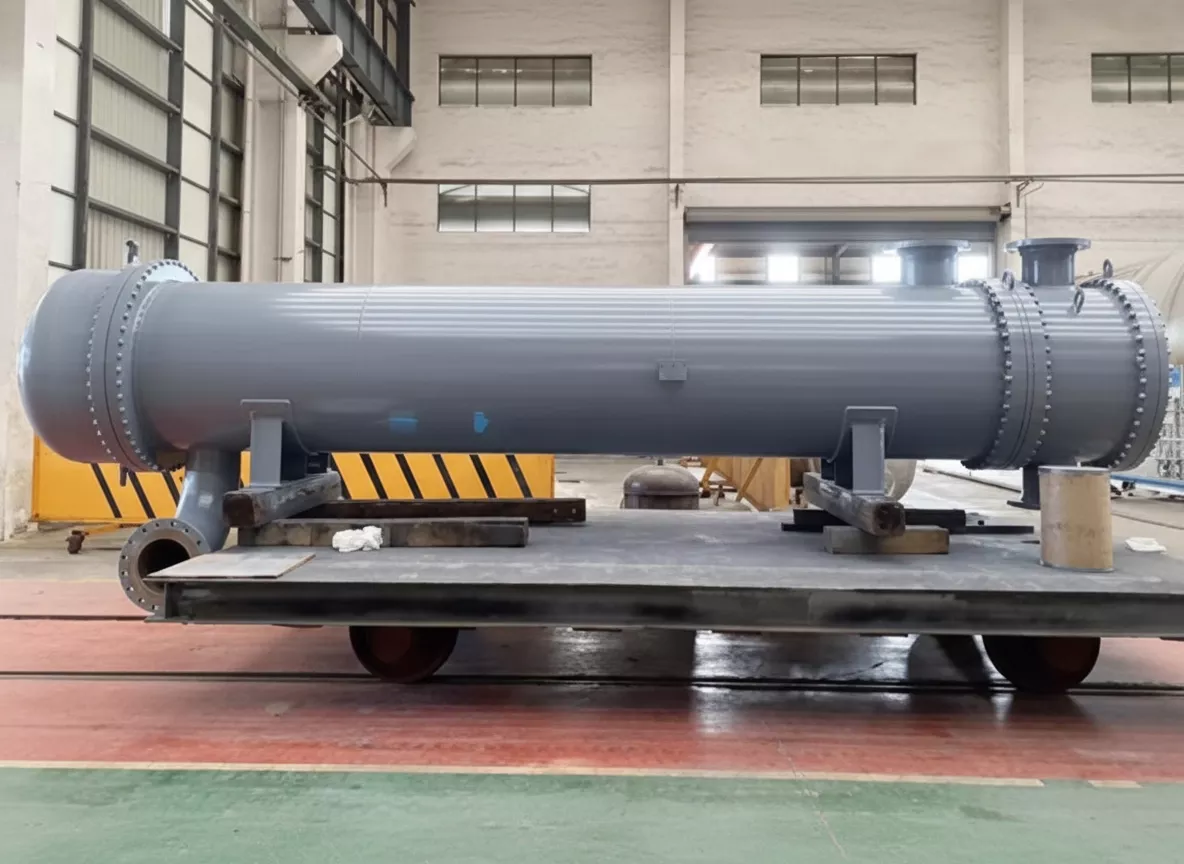
Product Range
Shell & Tube Fabrication Scope
ORL focuses on manufacturable shell-and-tube exchangers, tube bundles and pressure parts. Final feasibility depends on customer-approved datasheets, drawings, materials, dimensions, weight and inspection requirements.
Scope Boundary
ORL does not replace the owner, process design institute or EPC for thermal process design, process guarantees or complete equipment selection. For manufacturing quotations, please provide customer-approved technical documents first; oversized, ultra-high-pressure or special-material projects are reviewed case by case before acceptance.
Shell & Tube
- • Fixed tubesheet, U-tube and floating-head fabrication
- • Tube bundle, shell, channel and nozzle fabrication
- • CS, SS and selected alloy materials after review
Finned Tube / Coil Parts
- • Finned tubes, headers and coil parts
- • Fabrication support, not full ACC package design
- • Feasibility confirmed case by case
Plate Heat Exchanger Support
- • Available only through qualified partner supply
- • No in-house plate exchanger design guarantee
- • Datasheet and brand/specification required
Double Pipe / Hairpin Fabrication
- • Fabrication only after design review
- • No process guarantee without approved design
- • Application feasibility checked case by case
Spiral Heat Exchanger Inquiry
- • Not promoted as standard ORL product
- • Requires complete datasheet and drawings
- • Supplier feasibility to be confirmed
Custom Fabrication Review
- • Jacketed shells, tube bundles and pressure parts
- • No nuclear-grade or process design responsibility implied
- • Send datasheet and approved drawings for feasibility review
Fabrication Review Based on Approved Technical Documents
Send the TEMA datasheet, GA drawing, tube bundle drawing, material list and inspection requirements for a manufacturing feasibility and quotation review.
Manufacturing Excellence
Precision Manufacturing for Critical Applications
State-of-the-art fabrication facility in Jiangsu, China with advanced welding equipment, full NDT capability, and certified quality management for ASME, EN, and GB pressure vessel codes.
Years Experience
Heat exchanger design and fabrication
NDT Coverage
RT, UT, PT, MT on critical welds
Response Time
Technical queries and quotations
EN 3.1
Material certificates and compliance
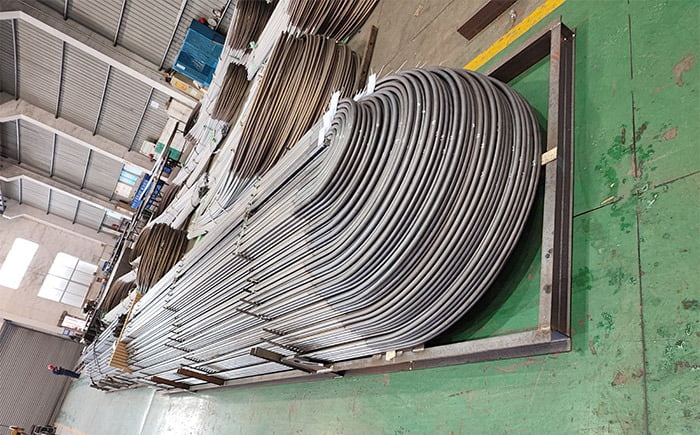
Advanced Manufacturing
Pressure vessel fabrication facility
Quality & Compliance
Factory & Process
See Our Manufacturing Process
From document review and material procurement through precision fabrication, NDT testing, pressure testing and final documentation — every manufacturable unit is reviewed before commitment.
Heat Exchanger Manufacturing Process
Shell fabrication, tube bundle assembly, pressure testing and final inspection
Manufacturing Process Highlights
Drawing & Datasheet Review
Customer-approved datasheet, GA drawing, tube bundle drawing and code requirements reviewed before fabrication commitment
Certified Material Procurement
EN 10204 3.1 material test reports for all pressure parts — plates, pipes, tubes, flanges, and fasteners
Precision Fabrication & Welding
GTAW / GMAW / SAW with qualified welding procedures; tube-to-tubesheet joints strength-welded and expanded
NDT, Hydrostatic Test & Final Inspection
RT / UT / PT / MT per code; hydrostatic test at 1.3× MAWP; dimensional check; third-party witness available
Competitive Advantages
Why Choose ORL Power Heat Exchangers
Direct manufacturer, ASME-certified, with 20+ years serving power plants, refineries, and industrial facilities worldwide — no agents, no markups, full engineering transparency.
ASME U-Stamp Certified
ASME Section VIII fabrication support can be provided when the approved design, inspection plan and order scope require it. Applicable nameplate data and documentation are handled according to the confirmed code scope.
- • ASME Section VIII Div.1 & Div.2
- • Authorized Inspection Agency coordinated
- • U-1 data report provided as standard
Complete Material Traceability
EN 10204 3.1 material test reports on all pressure parts as standard, not optional. Chemical composition, mechanical properties, and heat numbers recorded throughout fabrication.
- • EN 10204 3.1 for all pressure parts
- • Heat number traceability maintained
- • Complete QCP / ITP documentation
Fast RFQ Review
Fast response on RFQs with complete datasheets and drawings. Manufacturing feasibility, material availability, inspection requirements and delivery route are reviewed before quotation.
- • Prompt RFQ screening for complete inquiries
- • Manufacturing feasibility and drawing review
- • No process design guarantee without approved datasheet
Third-Party Inspection Ready
Experienced with SGS, TUV, BV, Lloyds, and client-nominated inspectors. Witness point schedules issued in advance; documentation pre-staged for inspector review.
- • SGS / TUV / BV / Lloyds coordinated
- • Witness point schedule issued early
- • Pre-inspection document packages
Global Shipping Network
Strategic location near Shanghai port with established logistics partnerships for breakbulk, container, and project cargo to any destination worldwide.
- • Export to 40+ countries
- • Breakbulk & project cargo experienced
- • Full export documentation package
Competitive Direct Pricing
Direct manufacturer pricing with no intermediary markups. Transparent quotations covering engineering, materials, fabrication, testing, documentation, and packaging.
- • No agent or trading company costs
- • All-in quotation, no hidden charges
- • Reliable delivery schedules
Industry Solutions
Fabrication Applications Across Industries
ORL reviews shell-and-tube heat exchangers, tube bundles and pressure parts for power generation, sugar processing and industrial projects when customer-approved datasheets and drawings define the manufacturing scope.
Power Generation
Lube oil coolers, hydrogen coolers, stator water coolers, and condensate heat exchangers for steam turbines and gas turbines. High reliability duty with extended maintenance intervals.
- • Steam turbine auxiliary coolers
- • Gas turbine lube oil & water coolers
- • Feedwater heaters and deaerators
- • Condenser hotwell and drain coolers
Sugar Mills & Agro-Processing
Juice heaters, evaporator calandria, molasses coolers, and cogeneration auxiliary coolers for sugar mills and ethanol distilleries requiring SS 316L or duplex stainless.
- • Juice heaters (direct steam injection)
- • Multiple-effect evaporator calandria
- • Molasses & massecuite coolers
- • Distillery fermenter coolers
Chemical & Petrochemical
Shell-and-tube exchangers, reboilers, condensers and pressure parts can be reviewed for fabrication when the client provides approved design documents and material specifications.
- • Feed/effluent and reboiler services
- • Column overhead condensers
- • NACE MR0175 H₂S-service units
- • Titanium for chloride-rich streams
Reference Projects
Steam Turbine Lube Oil Cooler
Power PlantTwo identical fixed-tubesheet S&T coolers for a 135 MW steam turbine lube oil system. ASME U-stamp, fully tested and delivered within 10 weeks of approved drawings.
Sugar Juice Multi-Effect Heater
Sugar MillSet of 6 juice heaters in SS 316L for a 6000 TCD sugar mill in Southeast Asia. Designed for CIP (cleaning-in-place) with removable tube bundles and wide-mouth heads.
Reactor Feed / Effluent Exchanger
Chemical PlantHigh-pressure shell & tube F&EHX for a hydroprocessing unit. NACE MR0175, 100% RT on longitudinal seams, spiral wound gaskets, TUV witness inspection.
Frequently Asked Questions
Heat Exchanger Technical FAQ
Engineering answers to the questions procurement engineers, project managers, and plant engineers ask most often when specifying and buying industrial heat exchangers from China.
What design codes do you work to — ASME, TEMA, EN, GB?
We manufacture and document approved shell-and-tube exchanger scopes according to the confirmed code requirements. Common references include:
- • ASME Section VIII Div.1 / Div.2 with U or U2 stamp — the most common requirement for Americas, Middle East, and Southeast Asia projects
- • TEMA standards (R, C, or B class) for shell and tube mechanical design, combined with ASME pressure design
- • EN 13445 / PED 2014/68/EU with CE marking for European projects
- • GB 150 / GB 151 for Chinese domestic or dual-standard projects
- • API 661 for air-cooled heat exchangers in refinery and petrochemical service
If your project specifies a combination — e.g. ASME pressure design + TEMA mechanical + NACE MR0175 materials — please provide the approved datasheet and drawings so we can confirm whether ORL can manufacture and document the scope.
What information do you need to quote a shell and tube heat exchanger?
The fastest path to an accurate quotation is a filled-in datasheet (TEMA format preferred). If you don't have one yet, we need:
Process Data (both sides):
- • Fluid name, phase (liquid / gas / two-phase)
- • Flow rate (kg/h or m³/h)
- • Inlet and outlet temperatures (°C)
- • Operating pressure (MPa g)
- • Allowable pressure drop (kPa)
Mechanical / Project Data:
- • Design code (ASME / EN / GB)
- • Material preferences or restrictions
- • Corrosion / erosion / fouling notes
- • Nozzle orientations or plot constraints
- • Inspection authority and witness requirements
A rough spec sheet is enough only for initial screening. For budget or firm quotation, customer-approved datasheets and drawings are required so we can confirm manufacturing feasibility before commitment.
How do you select the right tube material for corrosive services?
Material selection is one of the most consequential decisions in heat exchanger design. Our approach:
- • Carbon steel (SA-179 / SA-106): Standard for clean water, steam, light hydrocarbons below ~250°C — lowest cost, widest availability
- • Stainless steel 304L / 316L: Aqueous corrosive services, food/pharma, mild chloride environments
- • Duplex (2205 / 2507): High-chloride seawater or brine, combines strength with corrosion resistance
- • Titanium Gr.2 / Gr.12: Seawater coolers, chlorinated water, where stainless would pit — common in power plant condenser retrofit
- • Nickel alloys: Highly oxidizing acids, HCl, mixed acid service, chemical reactors
- • NACE MR0175 compliance: Required for any H₂S-containing streams above threshold — affects material certs, hardness limits, and PWHT
We can review material availability and fabrication suitability against the customer-approved datasheet. Process corrosion responsibility and final material selection should remain with the owner, EPC or design institute.
What are the pressure and temperature limits you can manufacture to?
Practical manufacturing limits depend on confirmed design, dimensions, weight, material procurement, lifting capacity and transport route:
Shell & Tube:
- • Pressure: project-specific review only
- • Temperature: per approved datasheet and code review
- • Shell OD: subject to shop and transport review
- • Single unit weight: subject to lifting, supplier and logistics review
Air Cooled (ACC):
- • Pressure: up to 25 MPa g
- • Temperature: -60°C to 450°C
- • Bundle width: up to 4000 mm
- • Fan diameter: up to 7200 mm
For ultra-high pressure, cryogenic service, oversized equipment or special alloys, send the datasheet and drawings first — we will confirm feasibility before quoting and will decline scopes outside our capability.
How do you prevent fouling, and what is the tube-side vs shell-side allocation recommendation?
Fouling is the single largest cause of heat exchanger performance degradation. For manufacturing inquiries, fouling and cleanability should already be reflected in the approved design. General design points include:
- • Fluid allocation: The fouling fluid goes tube-side whenever possible — tubes are easy to clean mechanically; shell side is much harder to access. Exceptions: corrosive fluids that attack the shell, high-pressure fluids where thick shells are expensive
- • Velocity design: Tube-side velocity maintained above 1.5 m/s (liquids) to reduce particulate settlement; below 3 m/s for erosion-sensitive fluids
- • TEMA fouling factors: We apply TEMA Table RGP-T-2.4 fouling resistances as minimums; client-specified values used where provided
- • Bundle design for cleanability: Fixed tubesheet for clean service (cheapest, best heat transfer); removable U-tube or floating head for fouling service requiring hydroblast cleaning
- • Anti-fouling coatings: Available on tube OD for cooling water service — reduces biofilm attachment in open-loop cooling systems
What NDT tests are performed, and which are mandatory vs optional?
Our standard NDT scope for ASME U-stamp units (additional tests available on request):
Standard (included):
- • Visual examination (VT) of all welds
- • Radiographic testing (RT) of all Category A butt welds
- • Dye penetrant (PT) on nozzle fillet welds
- • Hydrostatic pressure test at 1.3× MAWP
- • Dimensional inspection per drawing
Optional (per specification):
- • 100% RT on all seam welds (lethal service)
- • Ultrasonic testing (UT) for thick plate or PWHT verification
- • Magnetic particle (MT) for ferritic steels
- • Ferrite measurement on duplex / super duplex
- • Positive material identification (PMI) on all alloy parts
- • Helium leak test for vacuum service
All NDT results are documented with inspector name, date, technique, and accept/reject criteria. Reports are included in the final documentation book.
What documentation is delivered with the equipment?
Confirmed orders ship with a documentation dossier according to the agreed code and inspection scope. Typical contents may include:
- • ASME U-1 Data Report (or equivalent national report for other codes)
- • EN 10204 3.1 Material Test Reports for all pressure parts — shell, heads, nozzles, tubes, tubesheets, flanges
- • Welding Procedure Specifications (WPS) and Procedure Qualification Records (PQR)
- • Welder performance qualification records
- • NDT reports — RT films/digital files, PT/MT reports, UT scan records as applicable
- • Hydrostatic test certificate with date, pressure, hold time, and inspector signature
- • Dimensional inspection report
- • PWHT charts where required
- • As-built datasheet and drawings in PDF and DXF/DWG format
- • Operation and maintenance manual
Documents are provided in English as standard. Certified translations into other languages are available on request. Hard copies and digital (USB) delivery both available.
How do you handle third-party inspection and witness testing?
We welcome and actively facilitate third-party inspection. Our process:
- • ITP issued at order kick-off — Inspection Test Plan defines all witness (W), hold (H), review (R), and surveillance (S) points. Client signs off before fabrication starts
- • Advance notification — minimum 5 working days notice before each witness/hold point. We never spring tests on inspectors
- • Pre-inspection document packages — material certs, WPS, traveler, and dimensional drawings pre-staged for inspector arrival
- • Inspector access — unrestricted access to all manufacturing stages including supplier material receiving
- • Inspection agencies accepted: SGS, TUV Rheinland, Bureau Veritas, Lloyds Register, DNV, Intertek, and client-nominated agencies
Inspection costs (agency fees) are typically quoted as a separate line item so they are transparent. We can include them in the order if you prefer a turnkey delivery.
What is the typical delivery time for a custom heat exchanger?
Lead times depend on complexity, size, and material lead times. Typical schedule from order confirmation:
Engineering & Manufacturing:
- • Standard S&T (carbon steel, ASME): 8-12 weeks
- • Stainless or alloy tube bundle: 10-14 weeks (alloy material procurement adds time)
- • Air cooled heat exchanger: 12-16 weeks
- • High-pressure or exotic alloy (Hastelloy, Ti): 14-20 weeks
- • Engineering review and drawing approval: 2-3 weeks included in above
Key milestones we commit to:
- • Kick-off drawing submission within 3 weeks of order
- • Material receiving inspection within 2 weeks of delivery to shop
- • Weekly progress updates with photo records
- • Hydrostatic test notification minimum 5 days in advance
Expedited delivery is possible for standard sizes with pre-purchased materials — contact us for urgent project scheduling.
How often should heat exchangers be inspected and cleaned, and how do we plan a maintenance interval?
Maintenance frequency is driven by service severity, not a fixed calendar. Our recommendations:
- • Clean services (steam, condensate, clean water): Inspect every 3-5 years during planned turnaround. Hydrostatic re-test every 10 years or per jurisdictional rules
- • Moderate fouling (cooling tower water, lube oil): Annual performance monitoring; clean when overall heat transfer coefficient drops 15-20% from design, typically every 1-2 years
- • Heavy fouling (raw river water, process streams with solids): Quarterly inspection; online performance tracking recommended with differential temperature monitoring
- • Corrosive service: Annual external inspection plus UT thickness measurement on shell; tube sample pulled and visually/UT inspected every 3-4 years
Maintenance intervals should be set by the plant owner or design institute based on actual service severity. ORL can supply spare tube bundles or tube sets when drawings and material specifications are available.
Have a specific technical question not covered above?
Ask for Feasibility ReviewRequest Manufacturing Feasibility Review
Send your approved datasheet, drawings, material list and inspection requirements. ORL will review whether the exchanger or tube bundle is manufacturable and provide a practical quotation when the scope is clear.
What to Send Us
- TEMA Datasheet and approved drawings preferred: GA drawing, tube bundle drawing, nozzle schedule, both-side process data and design conditions
- Design Code: ASME, TEMA class, EN, GB, API 661, or combination
- Fluid Data: Name, composition, corrosiveness notes, NACE requirements if any
- Inspection: Third-party agency preference, witness points needed
- Delivery: Required date, destination port or site address
Direct Contact
Why source heat exchangers from ORL Power?
- ✓ ASME U-stamp with Authorized Inspector on-site
- ✓ EN 10204 3.1 material certs on all pressure parts
- ✓ Manufacturing review based on approved datasheets and drawings
- ✓ Third-party inspection fully supported
- ✓ Direct manufacturer — no agent, no markup
Technical Guide
Shell and Tube Heat Exchanger Fabrication and Tube Bundle Manufacturing
ORL supports shell-and-tube heat exchanger fabrication and tube bundle manufacturing based on customer-approved drawings, datasheets, material requirements and inspection specifications. This page is positioned for industrial fabrication projects, replacement tube bundles and heat transfer components, not for residential HVAC, small appliance or unrelated consumer heat exchanger requests.
Shell and Tube Heat Exchanger Fabrication
Shell-and-tube heat exchangers use tube bundles inside a shell to transfer heat between fluids. ORL focuses on fabrication according to provided engineering documents, including drawings, datasheets, material specifications, nozzle details and inspection scope.
Tube Bundle Manufacturing
Tube bundles can include tubes, tube sheets, baffles, tie rods, spacers and support parts. ORL can review replacement tube bundle requirements when drawings or measured interface dimensions are available.
What ORL Can Support
- Shell-and-tube heat exchanger fabrication according to drawings
- Replacement tube bundle manufacturing
- Finned tube heat exchanger components
- Tube sheet, baffle and support component fabrication
- Inspection and export packing according to project requirements
What We Do Not Position This Page For
- Residential HVAC repair or small appliance parts
- Plate heat exchanger spare plates without drawings
- Automotive radiators or consumer cooling parts
- Turnkey process design without confirmed datasheets
- Requests without drawings, material or operating data
Required Information for Review
To evaluate a heat exchanger or tube bundle request, please provide drawings, datasheets, design pressure and temperature, fluid information, material requirements, quantity, applicable standards, inspection scope and packing requirements. If drawings are not available, site dimensions and photos can be used for preliminary review, but final fabrication still requires confirmed specifications.
Heat Exchanger FAQ
Can ORL fabricate shell-and-tube heat exchangers?
Yes, when drawings, datasheets, material and inspection requirements are available for review.
Can ORL manufacture replacement tube bundles?
Yes. ORL can review replacement tube bundle projects based on drawings or confirmed interface dimensions.
Does ORL supply residential HVAC heat exchangers?
No. This page is for industrial fabrication projects and heat transfer components, not residential HVAC or small appliance parts.
What information is needed for quotation?
Please provide drawings, datasheets, material, design pressure, design temperature, fluid data, quantity and inspection requirements.
Can ORL make finned tube heat exchanger components?
Yes. ORL can manufacture finned tubes and related heat transfer components according to drawings.
Can ORL design a complete heat exchanger from only a process idea?
ORL should first review confirmed process data and engineering requirements; fabrication is based on approved drawings and specifications.
Related Products and Components
Boiler Finned Tubes · Boiler Economizer · Boiler Air Preheater · Waste Heat Boiler
Need Industrial Heat Exchanger Fabrication?
Send drawings, datasheets, material and inspection requirements so ORL can check whether the request fits our fabrication scope.
Request Fabrication Review