
Boiler Cyclone Separators
Inertial dust collectors for industrial boiler flue gas systems. Cyclone separators capture coarse fly ash before it reaches economizers, air preheaters, and bag filters — protecting downstream equipment and extending maintenance intervals.
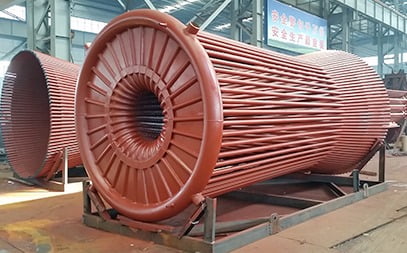
Fundamentals
What Is a Boiler Cyclone Separator?
A cyclone separator is an inertial dust collector installed in the flue gas duct downstream of the boiler furnace. It uses centrifugal force — not filters or moving parts — to separate solid fly ash particles from the gas stream. No moving parts means low maintenance and long service life.
How It Works — 4 Steps
Key performance concept: Higher gas velocity and smaller cyclone diameter both improve separation efficiency — but increase pressure drop. The right cyclone geometry balances collection efficiency against fan power consumption for your specific gas volume, dust loading, and particle size distribution.
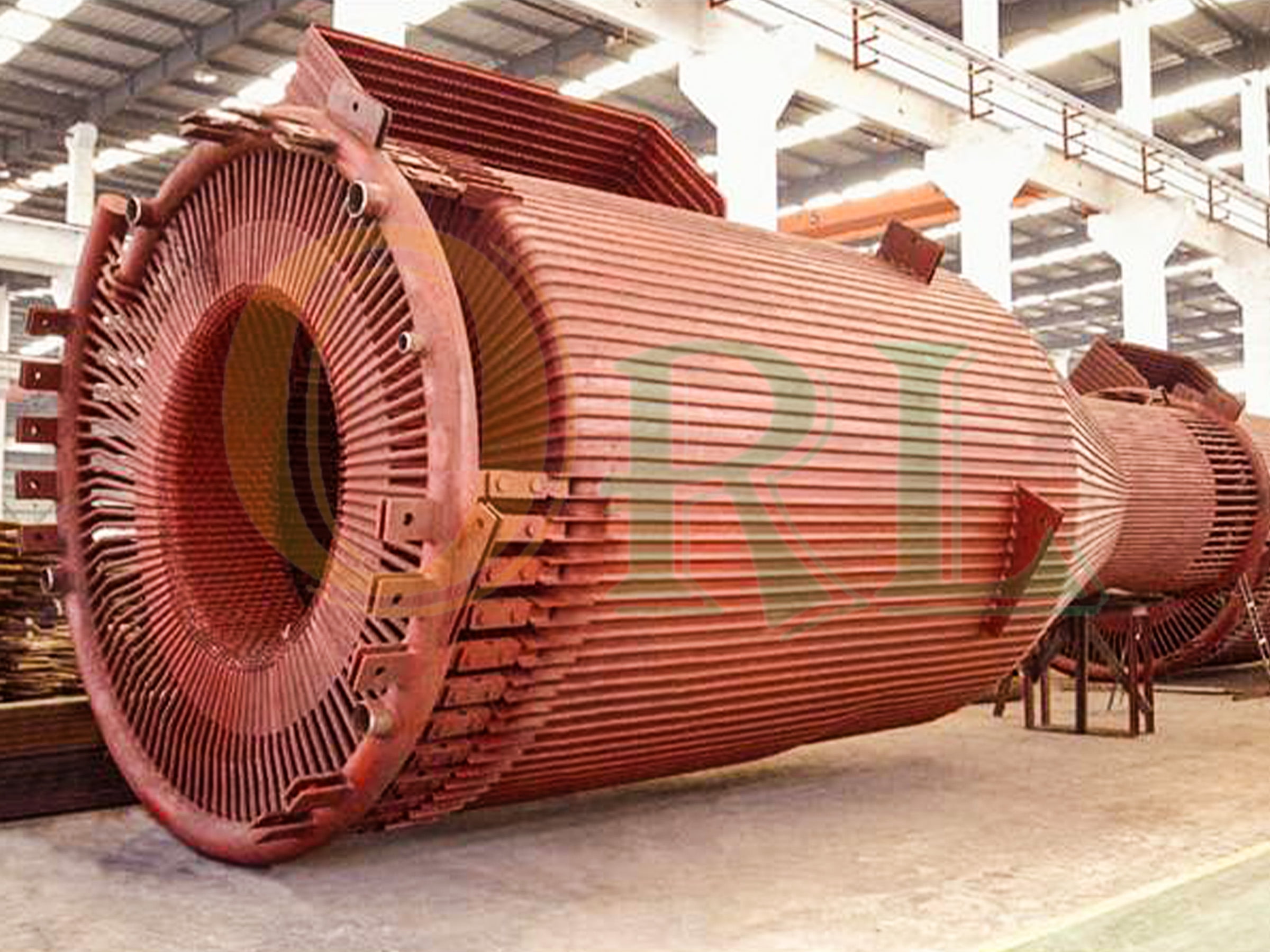
Why Install a Cyclone?
- Protect economizers & air preheaters from erosion
- Extend bag filter life — reduce coarse dust loading
- No moving parts — minimal maintenance
- Continuous duty at 450°C+ flue gas temperature
- Low operating cost vs. other dust collectors
- Retrofit or new build — both within scope
Product Range
Cyclone Types & Configurations
The right cyclone arrangement depends on gas volume, dust loading, space constraints, and whether the cyclone is the final dust collector or a pre-collector before a bag filter or ESP. Three configurations cover the full range of industrial boiler applications.
Single Large Cyclone
One large-diameter cyclone on the flue gas duct. The simplest arrangement — minimal ducting, easy inspection, lowest initial cost. Suitable where coarse dust removal is sufficient and moderate collection efficiency is acceptable.
- Small industrial boilers, coarse dust
- Where moderate efficiency is acceptable
- Low-dust-loading applications
Multi-Cyclone Array
Multiple small-diameter cyclone tubes in parallel inside a common housing. Smaller tube diameter means higher centrifugal force and better separation of fine particles. Modular structure fits constrained spaces; individual tubes can be replaced without replacing the whole assembly.
- Medium to large industrial boilers
- Biomass & waste-to-energy lines
- Pre-collector before bag filter / ESP
Cyclone + Bag Filter / ESP
Cyclone as pre-collector ahead of a bag filter or ESP, capturing the coarse fraction — typically 80–95% of dust mass — before it reaches the fine filter. This extends bag life, reduces ESP cleaning frequency, and lowers overall system operating cost.
- Coal-fired & biomass boilers with strict limits
- Waste-to-energy emission control lines
- Extends downstream filter or ESP life
| Feature | Single Cyclone | Multi-Cyclone | Cyclone + Bag / ESP |
|---|---|---|---|
| Collection efficiency | Medium | Medium–High | High (system) |
| Space requirement | Larger unit | Compact, modular | Depends on system |
| Complexity | Simple | More components | System integration |
| Best use case | Basic dust control | Enhanced removal | Strict emissions |
Not sure which configuration suits your boiler? Send us flue gas volume, dust loading, and space constraints — we'll advise.
Get Engineering AdviceQuality Assurance
Materials & Standards
Cyclone separators operate in an erosive, high-temperature environment. Shell material and internal wear protection are specified against flue gas temperature, particle abrasiveness, and required service life — not just design pressure.
Shell Material by Operating Condition
Wear Protection Strategy
ORL Power approach: We confirm the wear protection specification at drawing review stage — not after fabrication. The inlet velocity, particle density, and silica content of the fly ash are the three critical inputs. We ask for these at quotation stage to avoid undersizing the wear allowance.
Certifications & Compliance
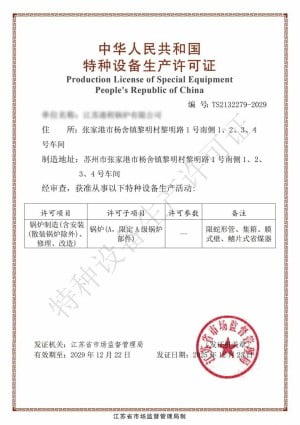
Grade A Boiler
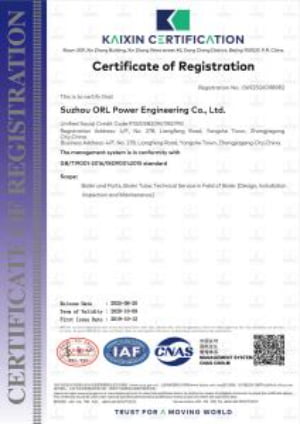
ISO 9001
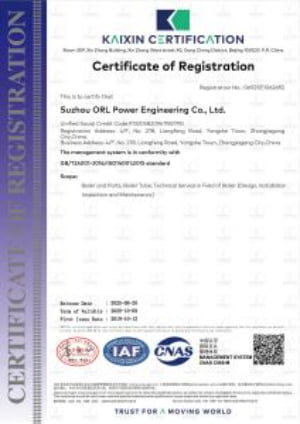
ISO 14001
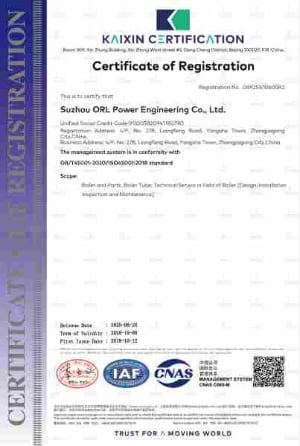
ISO 45001
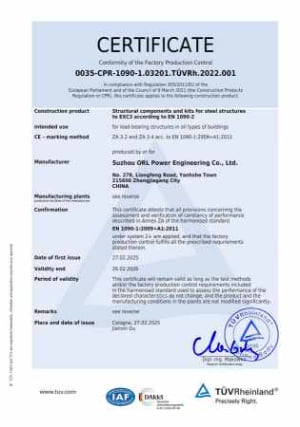
EN 1090
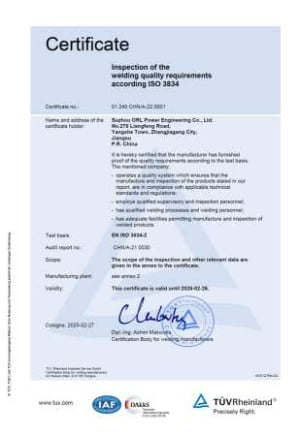
EN 3834
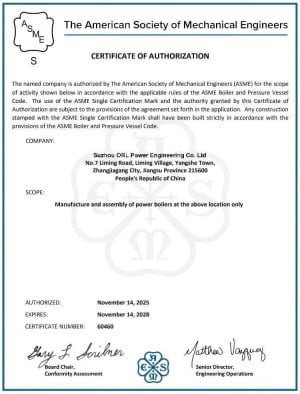
ASME S
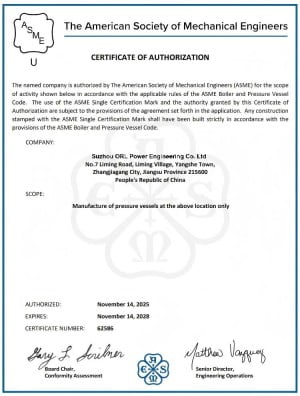
ASME U
Our Advantage
Why Choose ORL
A cyclone that fails early causes downstream equipment damage and forces an unplanned outage. The points below reflect where ORL Power invests to make premature cyclone failure uncommon.
Wear Zone Design Review Before Fabrication
Before cutting plate, our engineering team reviews the inlet velocity, particle density, and fly ash abrasiveness to confirm the wear protection specification. If the drawing specifies plain carbon steel at the inlet for a high-silica fly ash application, we flag it before fabrication begins — not after the cyclone has eroded through.
Geometry Accuracy — Cylinder, Cone & Inlet
Cyclone separation efficiency is sensitive to the geometry ratio between cylinder diameter, cone length, and inlet area. Deviations from the designed geometry degrade performance in service. We verify cylinder roundness, cone angle, and inlet cross-section against the drawing during fabrication and record results in the dimensional inspection report.
Full Material Traceability
Shell plates, wear liner steel, and all nozzle forgings are supplied with EN 10204 3.1 material test certificates. Each plate is identified by heat number and traced through to the fabrication record. For ASME-scope supply, material identification is maintained per ASME Section I requirements throughout fabrication.
Retrofit Fit — Match to Existing Duct
Retrofit cyclone replacement or upgrade projects require the new cyclone to connect to existing duct flanges without modification to the surrounding structure. We manufacture to the original flange drilling, nozzle orientation, and support saddle dimensions, and verify dimensions before despatch. If no original drawing exists, we work from field measurements and photographs.
Complete System from One Source
Cyclone separators fabricated at ORL Power can be supplied as part of a complete boiler tail-end package — economizer, air preheater, cyclone, and duct connections — with a single set of code documentation. This eliminates the interface between a cyclone fabricator and a pressure parts manufacturer, which is where most fitment problems originate.
Confirmed Lead Time — Not an Estimate
Cyclone replacement is typically on the critical path of a boiler outage. We provide a fabrication milestone schedule at order confirmation — plate receipt, rolling completion, welding, lining installation, inspection, and despatch — updated weekly. Slippage is flagged before it becomes a site delay.
Send us your flue gas data and space constraints.
We'll confirm cyclone type, material, and delivery schedule in one reply.
Applications
Industries We Serve
Any combustion boiler burning solid or mixed fuel generates fly ash that must be captured before the downstream equipment. The buyer is typically an EPC contractor, a boiler OEM, or a plant owner replacing a worn cyclone during a scheduled outage.
Coal-Fired Power
Utility and industrial coal boilers. High fly ash concentration and abrasive quartz particles. Multi-cyclone arrays as pre-collectors before ESP or bag filters. Wear-resistant steel and replaceable ceramic cone liners are standard for high-silica coals.
Biomass & Sugar Mills
Bagasse, wood chip, and agricultural residue boilers. Fly ash is softer than coal ash but dust loading can be high. Single or multi-cyclone for coarse pre-separation. Sugar mill cogeneration boilers typically operate under IBR or ASME — both within ORL Power scope.
Waste-to-Energy
Municipal solid waste and refuse-derived fuel boilers. Fly ash contains heavy metals and chlorine compounds. Cyclone as first-stage dust collection before the fabric filter. Stainless steel or heat-resistant alloy components specified for corrosive flue gas conditions.
Cement, Steel & Industrial
Cement kiln exhaust, steel plant process gases, and general industrial boilers with high-abrasion dust. Some of the most demanding cyclone applications for wear resistance. Ceramic tile lining and replaceable wear inserts are standard specification for cement and steel plant cyclones.
Tell us your fuel type and boiler capacity.
We'll confirm cyclone type, material, and lead time in one reply.
Frequently Asked Questions
Cyclone Separator FAQ
Common questions from boiler OEMs, EPC contractors, and plant engineering teams about cyclone design, wear protection, and system integration.
What data do you need to design a cyclone separator?
The minimum information needed for a preliminary design and quotation:
- • Boiler capacity (t/h steam or MW thermal)
- • Fuel type (coal, biomass, waste, etc.) and approximate ash content
- • Flue gas volume at the cyclone inlet (Nm³/h or actual m³/h)
- • Flue gas temperature at the cyclone inlet (°C)
- • Dust concentration at the cyclone inlet (g/Nm³) — if available
- • Particle size distribution or description (coarse / fine / sticky)
- • Available installation space (height, width, depth)
- • Applicable code (ASME / GB / EN / IBR)
- • Whether this is a standalone cyclone or pre-collector before bag filter / ESP
Even partial information is a useful starting point — share what you have and we'll ask focused questions from there.
How does the cyclone affect my system pressure drop?
Cyclone pressure drop is a direct result of the gas velocity inside the cyclone — higher velocity improves separation efficiency but increases pressure loss. The two cannot be independently optimised; the design always involves a trade-off.
Typical pressure drop for industrial boiler cyclones is 300–800 Pa for a single cyclone, and up to 1,200 Pa for a multi-cyclone array. During engineering, we calculate the expected pressure drop and compare it against your existing ID fan capacity. If the additional pressure drop would push the fan beyond its design point, we adjust the cyclone sizing to stay within your fan envelope.
If you provide fan curve data or the current operating point, we can confirm whether the cyclone can be added without fan modification.
Can you supply a cyclone for a retrofit project where space is tight?
Retrofit projects are a regular part of our cyclone supply — not a special case. The approach depends on what is constrained: if the flue gas duct connection points are fixed, we design the cyclone geometry to fit between them. If the available height is limited, a multi-cyclone arrangement (lower overall height than a single unit for the same gas volume) is often the solution.
What we need from you: existing duct layout drawing showing the available space and connection flanges, or site photographs with key dimensions. If no drawing exists, a sketch with approximate dimensions is sufficient to start the design conversation.
Replacement cyclones for existing units are manufactured to match the original flange drilling and nozzle orientation, so no duct modification is required on site.
Can you supply the cyclone together with the downstream economizer or air preheater?
Yes — this is a common supply arrangement and often the better option. When the cyclone, economizer, and air preheater come from different suppliers, the duct connections between them are the most common source of fitment problems on site.
ORL Power fabricates all three in the same facility and coordinates the connecting duct flanges so the assembly fits without site modification. A single code data report covers the complete assembly. This is particularly useful for EPC contractors managing a tight installation schedule where unexpected fitment problems would cause programme delay.
Have a technical question not covered here?
Ask Our Engineering TeamGet Your Quote
Contact Our Engineering Team
Send your boiler capacity, fuel type, flue gas volume, and space constraints. We reply within 24 hours with cyclone type recommendation, material specification, and lead time.
Get Your Cyclone Quote
Share your flue gas data and space constraints — we reply within 24 hours with cyclone type, material, and lead time.
What to Include in Your Inquiry
- • Boiler capacity (t/h or MW)
- • Fuel type and approximate ash content
- • Flue gas volume (Nm³/h) and temperature (°C)
- • Dust concentration at inlet (g/Nm³) if known
- • Available installation space (H × W × D)
- • Single cyclone, multi-cyclone, or pre-collector
- • Applicable code (ASME / GB / EN / IBR)
- • New build or retrofit replacement
- • Required delivery date