
Boiler Convection Tube Bundles
Bare and finned tube bundles for industrial boilers, waste heat recovery units, and package boilers. Engineered for maximum heat transfer, erosion resistance, and precise drop-in replacement fit.
Fundamentals
What Are Convection Tube Bundles?
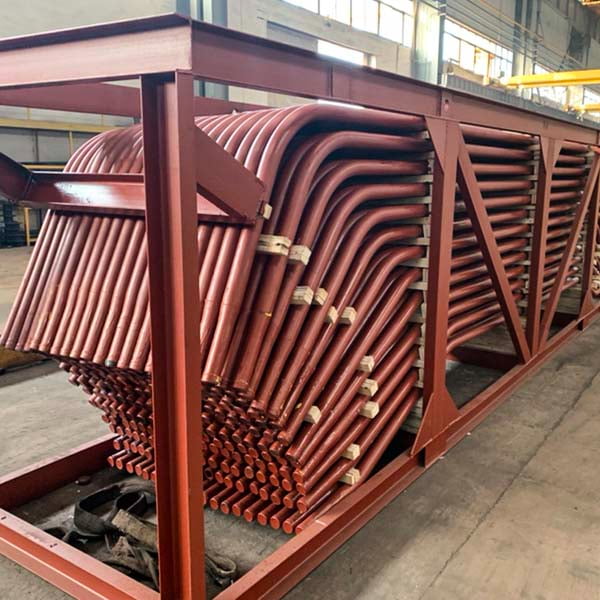
Tube bundles located in the convection pass — the duct downstream of the furnace where flue gas temperature has dropped below ~900°C and radiation heat transfer gives way to forced convection. They recover heat from hot flue gas and transfer it to water or steam inside the tubes.
How It Works
What We Supply
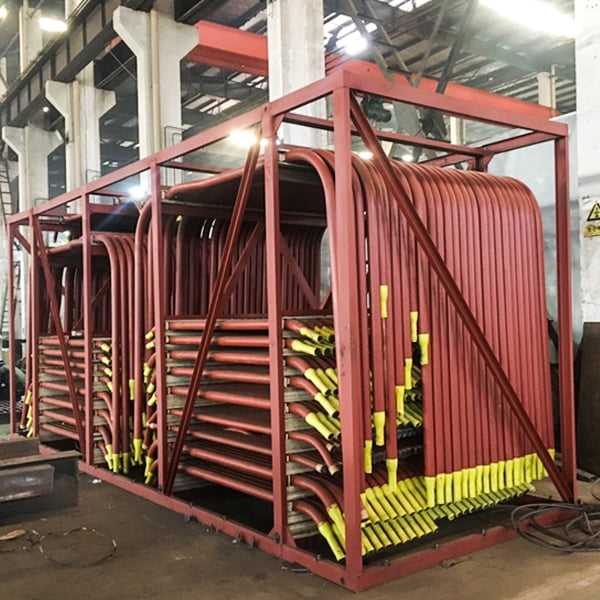
- Bare tube bundles — inline or staggered arrangement
- Finned tube bundles — solid or serrated fins
- Inlet & outlet headers with connection stubs
- Tube support combs and spacer frames
- Sootblower lane provisions where required
- Full documentation & material traceability
Product Range
Convection Bundle Types
The right bundle type is determined by flue gas conditions — dust loading, temperature, corrosion risk, and required heat transfer rate. ORL Power manufactures all three configurations.
Bare Tube Bundles
Plain tube bundles for high-dust, high-temperature, or corrosive flue gas environments where fins would plug with ash or corrode prematurely. The standard choice for coal, CFB, and biomass boilers with aggressive flue gas.
- Inline or staggered tube arrangement
- Sootblower lane design for ash cleaning
- Anti-erosion shields on leading tube rows
- Suitable for temperatures up to ~900°C gas inlet
Finned Tube Bundles
Extended surface bundles for clean or low-dust flue gas — waste heat boilers on gas turbines, cement kiln top-stage WHBs, and package boiler convection sections. Fins increase the external surface area and significantly raise heat transfer per unit of duct volume.
- Solid or serrated (helical) fin options
- Fin pitch matched to gas dust loading
- Carbon steel or alloy tube + carbon steel fin
- Compact design for space-constrained WHB units
Replacement Bundles
Drop-in replacement bundles for existing boilers — built to print from your drawings, or reverse-engineered from samples and measurements when original drawings are unavailable. Outage-window delivery coordination as standard.
- Built to original drawing or reverse-engineered
- Pre-shipment dimensional report confirming fit
- Option to upgrade tube grade or fin geometry
- Delivery aligned to your shutdown schedule
Not sure whether bare or finned tubes are right for your application? Share your flue gas dust loading and temperature — we'll advise in one reply.
Get Technical AdviceQuality Assurance
Materials & Standards
Convection tube material is selected by gas inlet temperature and operating pressure. Most bundles use carbon steel — alloy grades are needed only where metal temperature is driven above ~400°C by high operating pressure or high-temperature gas.
Tube Material Selection
Fin material for finned tube bundles is typically carbon steel (SA-36 or equivalent) for operating temperatures below 400°C, and matched-grade alloy for higher-temperature applications. Fin attachment is by high-frequency welding or tension winding per tube grade and service condition.
Design Codes We Work To
Sec. I
VIII
16507
12952
Certifications & Capability Evidence
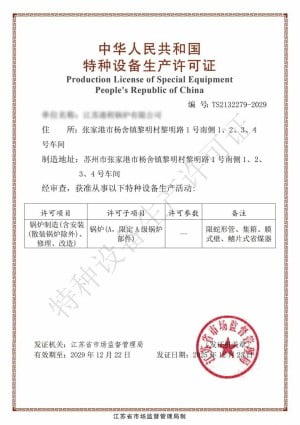
Grade A Boiler
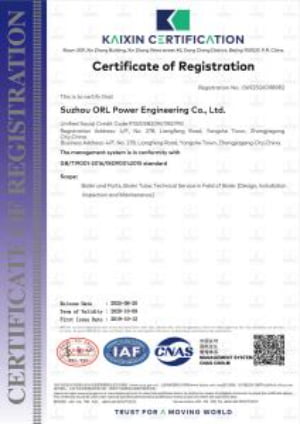
ISO 9001
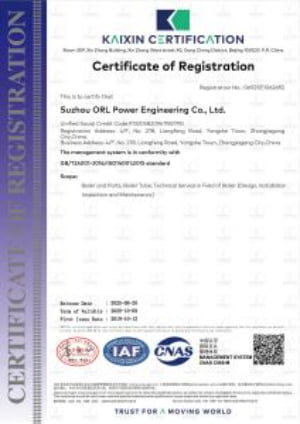
ISO 14001
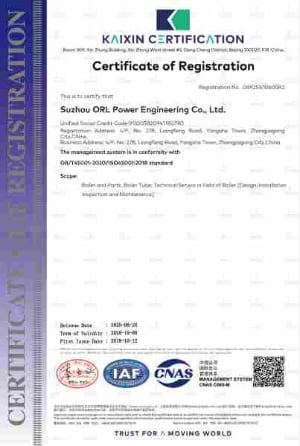
ISO 45001
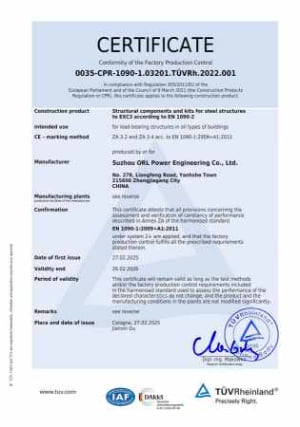
EN 1090
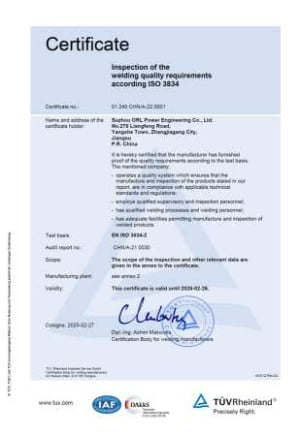
EN 3834
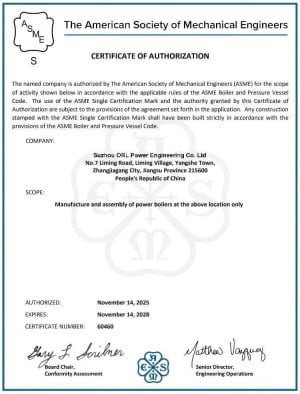
ASME S
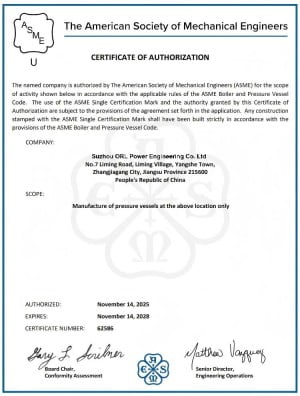
ASME U
Our Advantage
Why Choose ORL
A fouled or eroded convection bundle forces an unplanned outage. Getting tube pitch, fin geometry, and sootblower lane spacing right at the design stage is more important than unit price.
Thermal Design Review
For new-build scope, we review tube pitch, tube rows, and arrangement (inline vs staggered) against your gas flow and heat duty before fabrication begins — not after delivery. Thermal calculations available on request.
Erosion-Aware Design
For high-dust flue gas — coal, CFB, biomass — leading-row tube erosion is the primary failure mode. We specify anti-erosion shields and adjust tube pitch to reduce impingement velocity where your operating data indicates a problem.
Replacement Interface Precision
Replacement bundles are manufactured to the original header interface dimensions and verified against a pre-shipment dimensional report. If your drawings are missing, we can work from site measurements or physical samples from the existing bundle.
Outage Schedule Discipline
We build the production schedule backward from your required delivery date. Weekly progress updates from order placement — if anything moves, you hear from us first, not at the port. Convection bundle lead times are tracked the same as any critical-path item.
Full Documentation Package
3.1 MTCs for all tube and fin material, WPS/PQR, welder qualification records, NDT reports, dimensional inspection certificate, and as-built drawing — standard with every delivery, not charged separately.
ASME S & U — Both Stamps in One Facility
Convection bundles can fall under either Power Boiler (Sec. I, S-stamp) or Pressure Vessel (Sec. VIII, U-stamp) scope depending on boiler type. ORL holds both — confirmed during technical review so the correct stamp is on the nameplate from the start.
Tell us about your flue gas conditions.
Gas temperature, dust loading, and operating pressure — we'll recommend tube type, material grade, and arrangement in one reply.
Applications
Industries We Serve
Convection tube bundles appear in almost every type of industrial boiler and waste heat recovery unit. The gas conditions vary widely — ORL Power has manufactured bundles for all of them.
Waste Heat Recovery
Cement kiln, glass furnace, and steel mill waste heat boilers — typically clean gas suited to finned tube bundles for compact, high-efficiency heat recovery. Also new-build WHBs on gas turbine exhaust (HRSG).
Power Plants
Utility and industrial power boilers — coal, CFB, and oil/gas. High flue gas dust loading requires bare tube bundles with sootblower lanes and erosion shields on leading tube rows.
Sugar Mill & Biomass
Bagasse and agricultural residue boilers. Ash with high alkali content drives tube selection toward corrosion-resistant grades for the hotter rows. Bare tube bundles standard for this fuel type.
Industrial Process
Package boilers, process steam boilers, and thermal oil heaters for chemical, food, and textile plants. Replacement scope is the most common request — matching original design or upgrading tube grade for longer service life.
Tell us your boiler type, fuel, and gas conditions.
We'll confirm bare vs finned, tube grade, and applicable code in one reply.
Manufacturing Process
Factory & Process
From tube incoming inspection through header welding and dimensional verification — each step controlled, documented, and visible to third-party inspection.
Key Production Steps
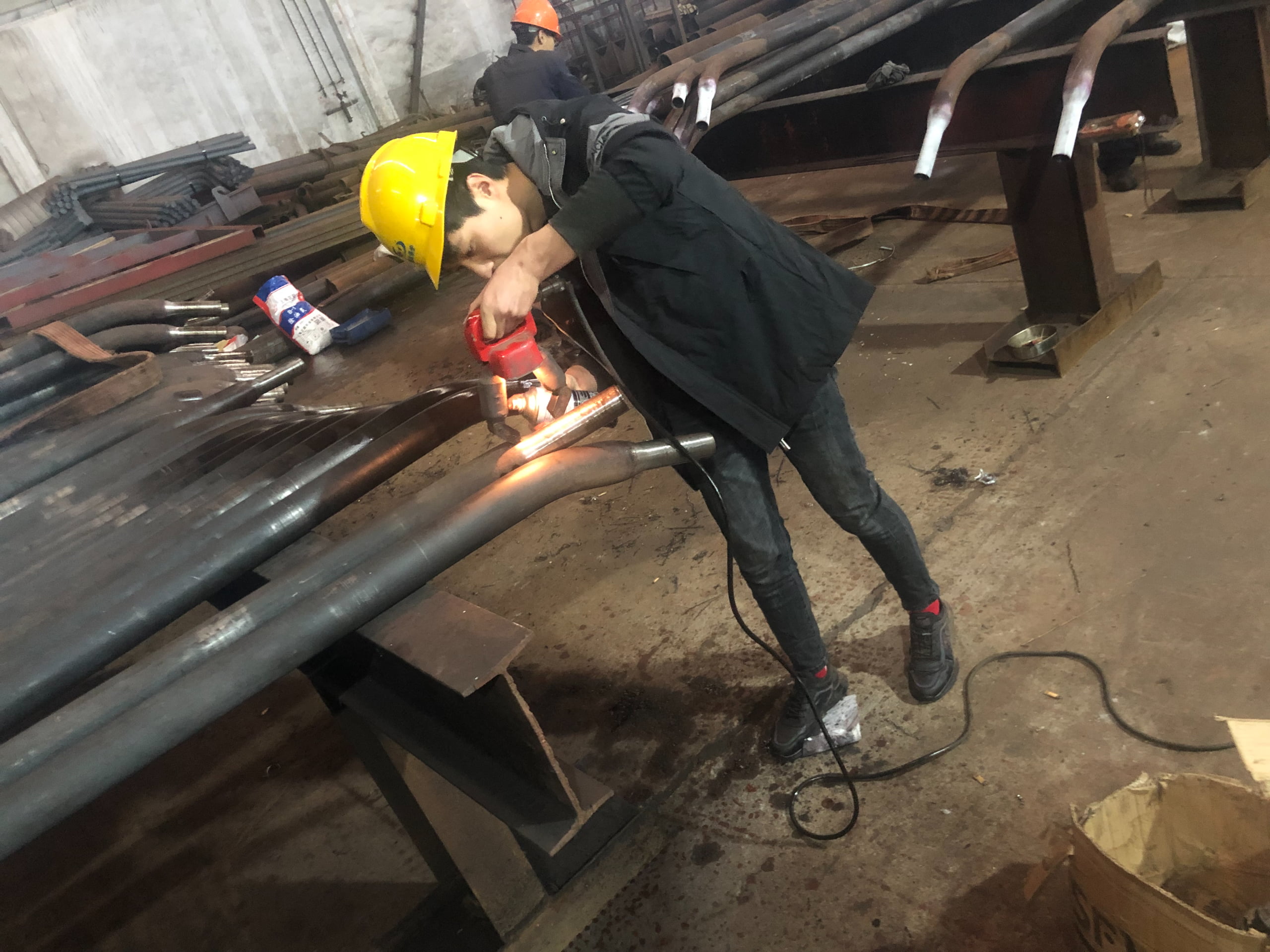
Tube bundle assembly & header welding
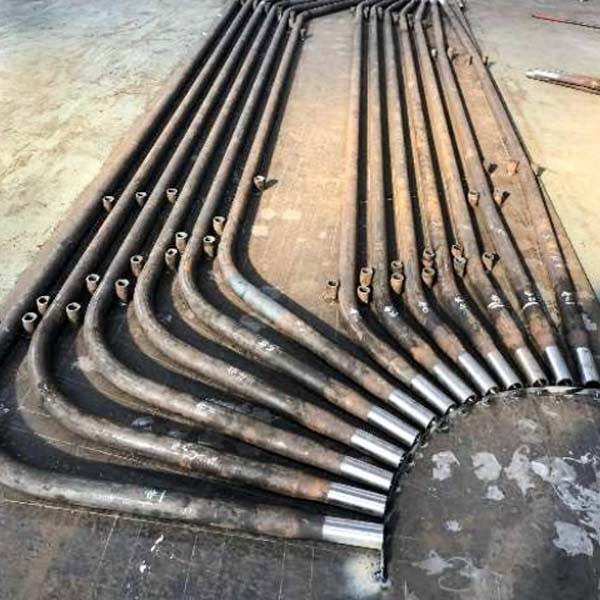
CNC tube bending & fin attachment
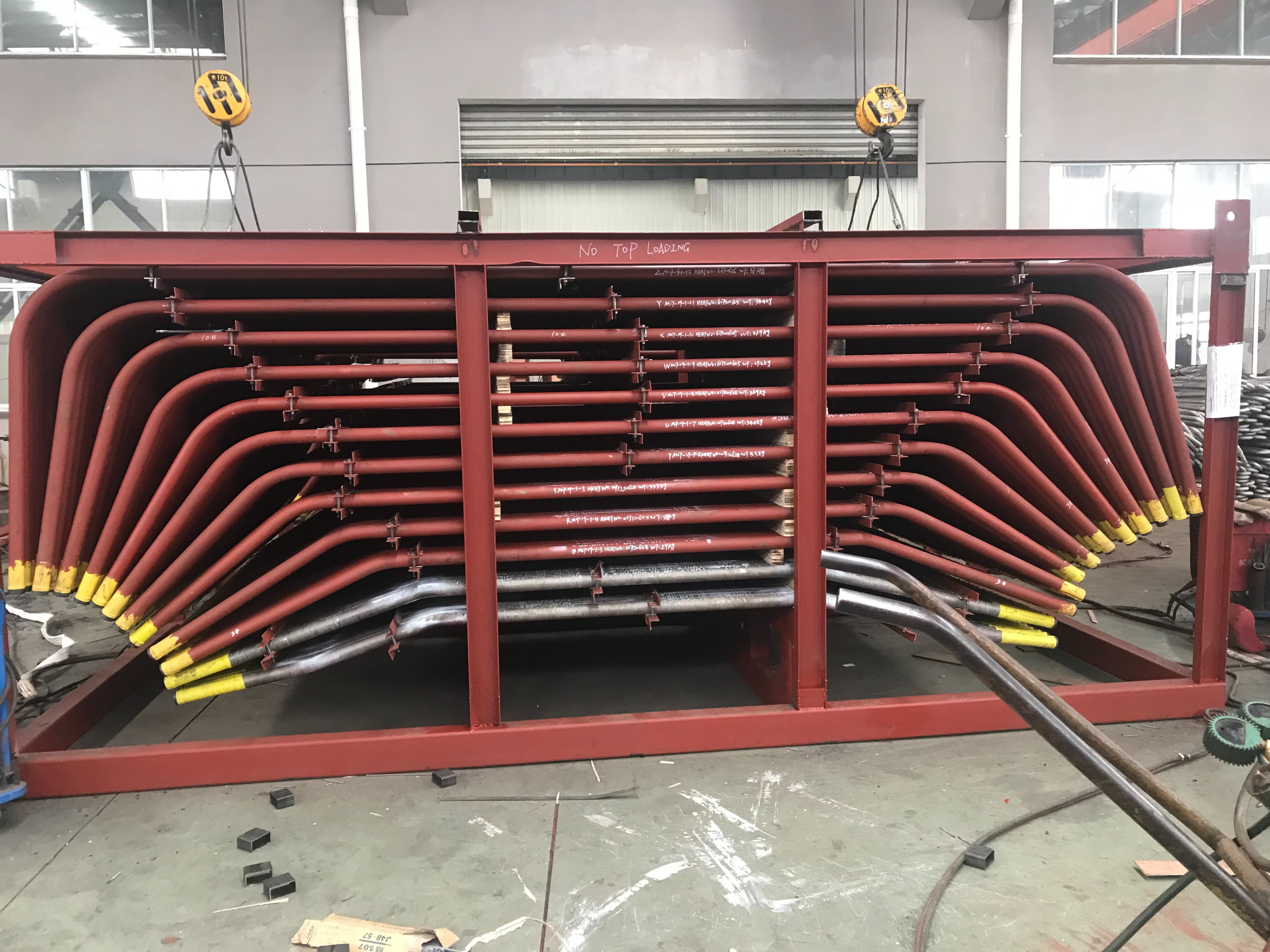
Dimensional inspection & export packing
Project Portfolio
Recent Project Highlights
Selected convection tube bundle projects — waste heat recovery, industrial replacement, and package supply across different fuels and codes.
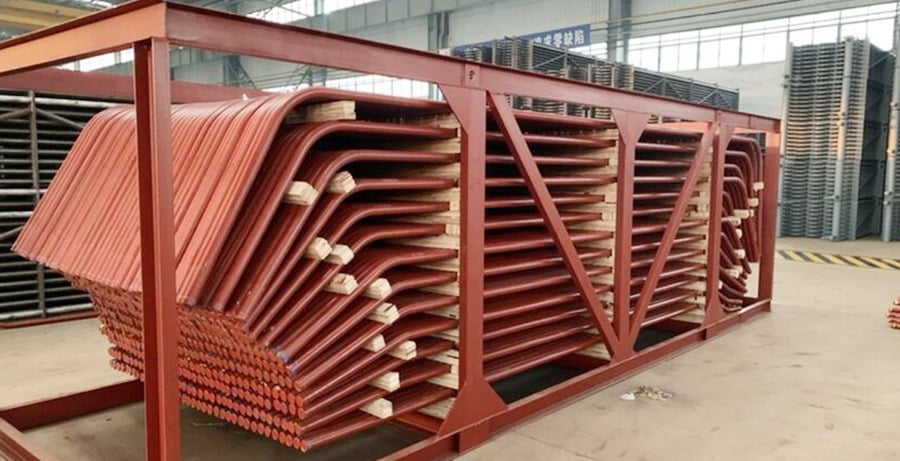
Sugar Mill WHB Convection Bundles (Philippines)
Bare tube convection bundle set for waste heat boiler on bagasse-fired cogeneration plant. SA-210 A1 tube, staggered arrangement with sootblower lanes. Third-party inspection by SGS.
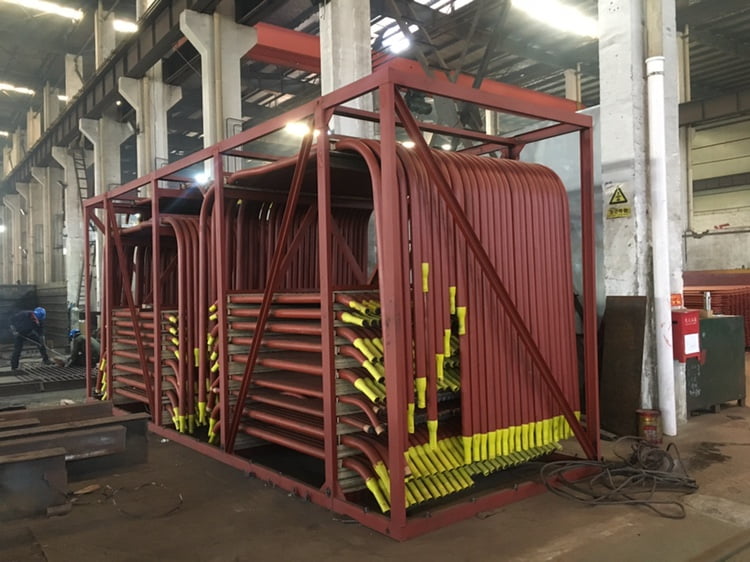
Cement Kiln WHB — Finned Bundles (Algeria)
Finned tube convection bundles for cement kiln waste heat recovery boiler — low-dust gas suited to extended surface design. SA-210 A1 tube with carbon steel serrated fins. Coordinated with economizer package supply.
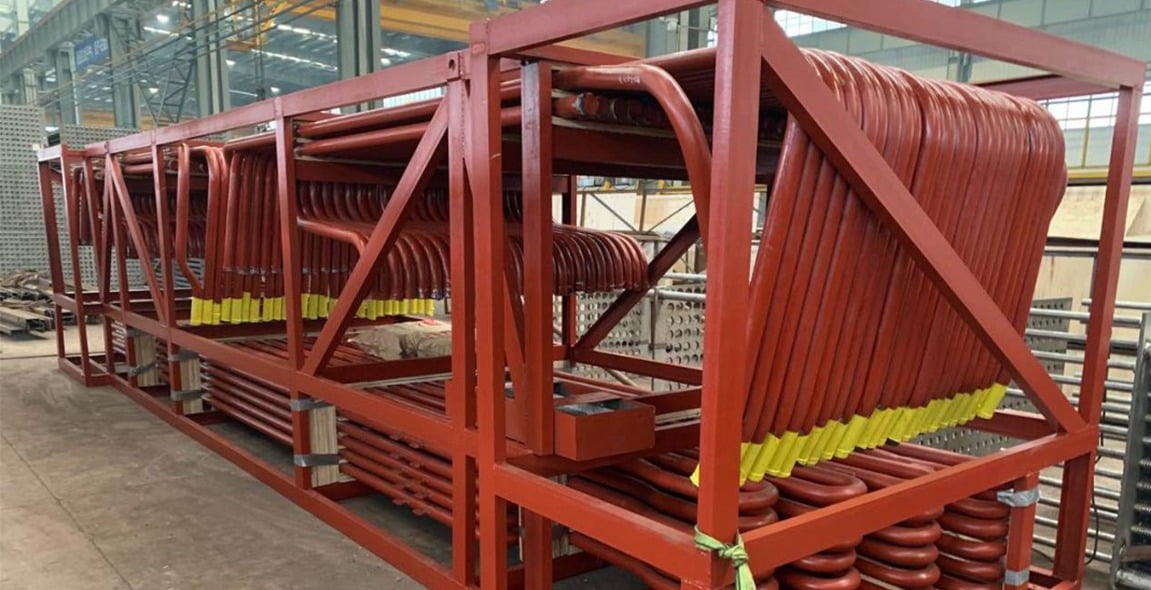
Industrial Boiler Replacement Bundles (Korea)
Replacement bare tube convection bundles for metallurgical process WHB. Original drawings unavailable — reverse-engineered from site measurements and failed bundle samples. Upgrade to T11 on leading rows.
Have a similar project? We'd like to hear about it.
Discuss Your ProjectCustomer Visits & Evidence
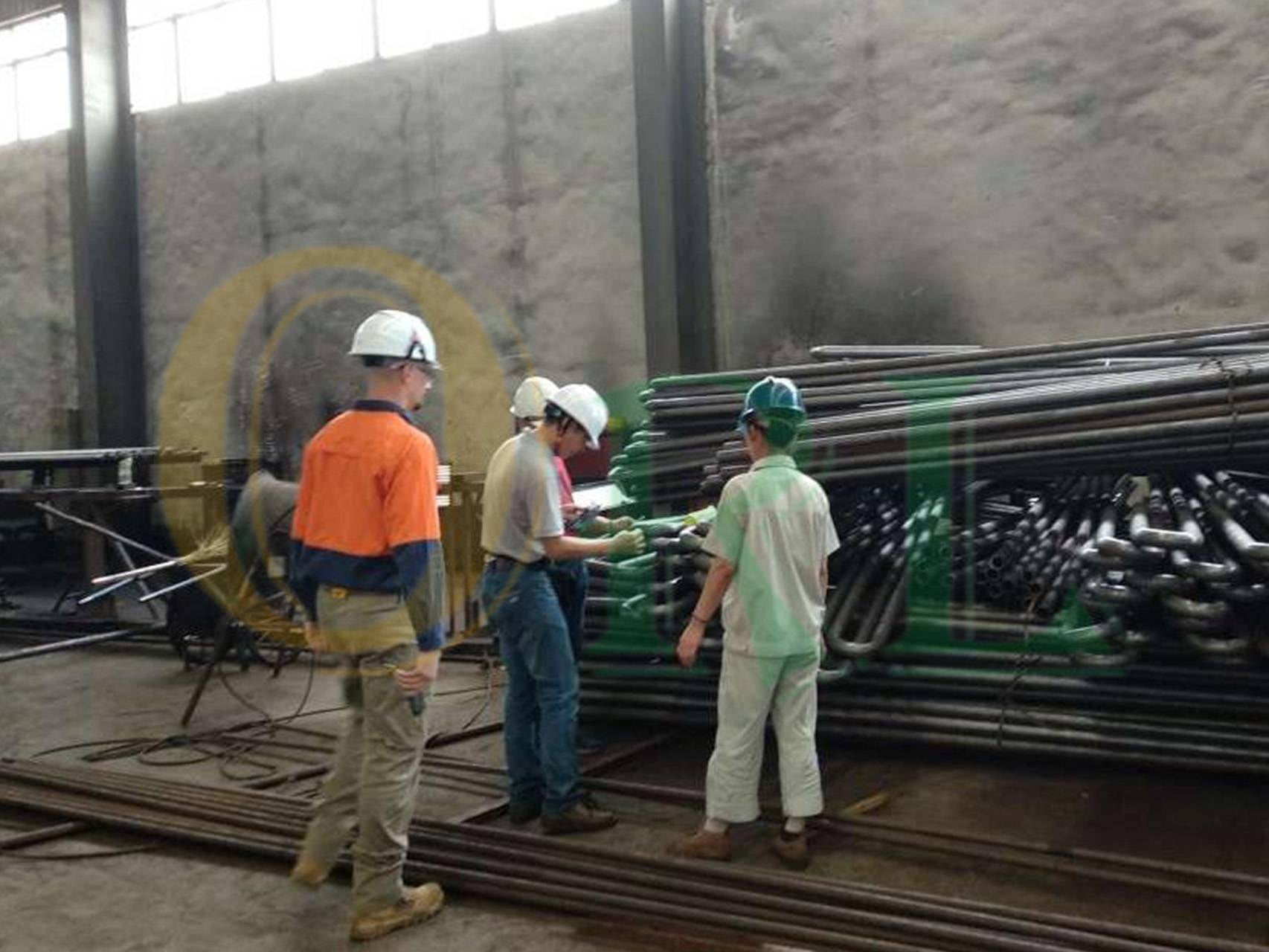
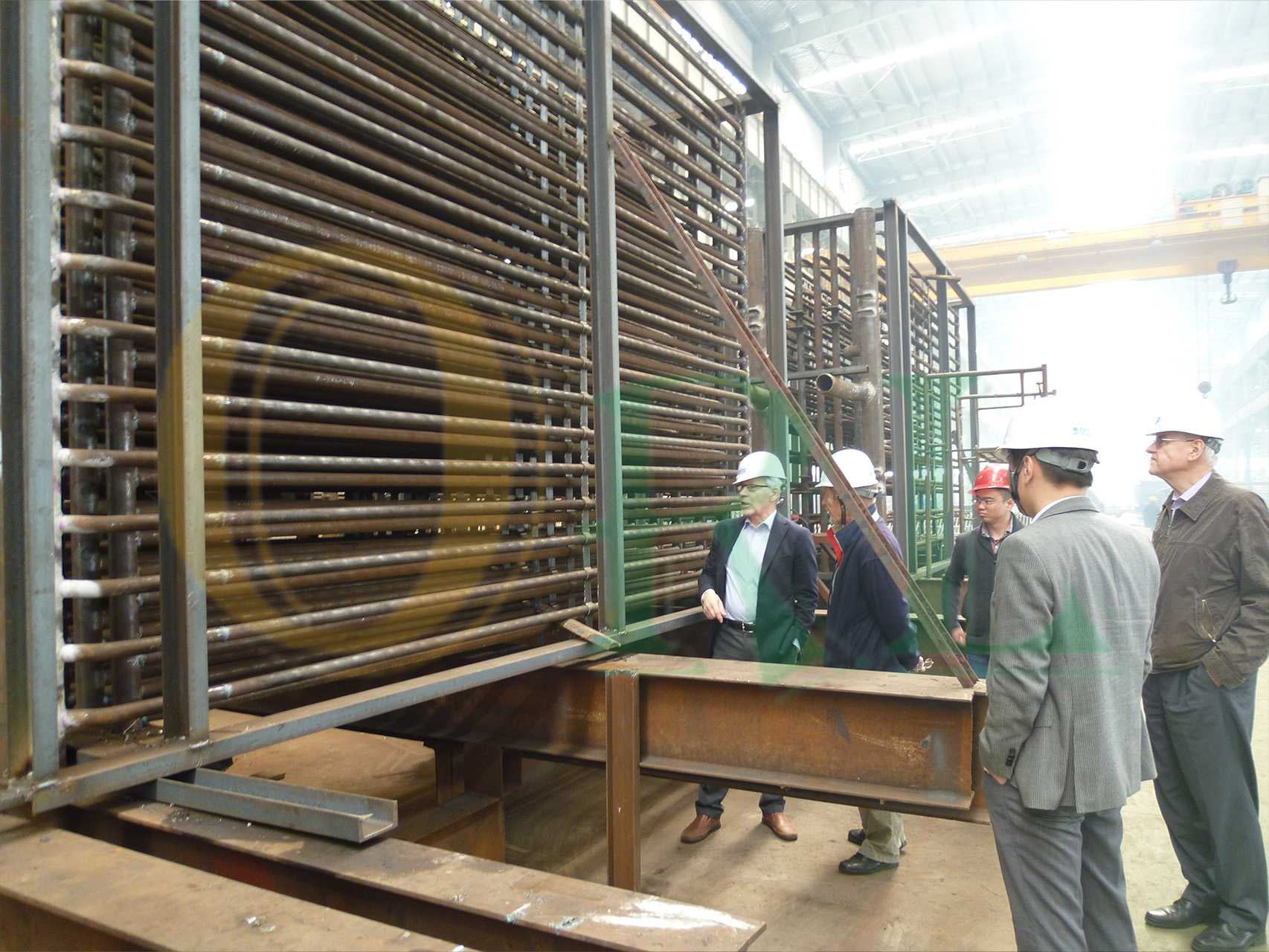
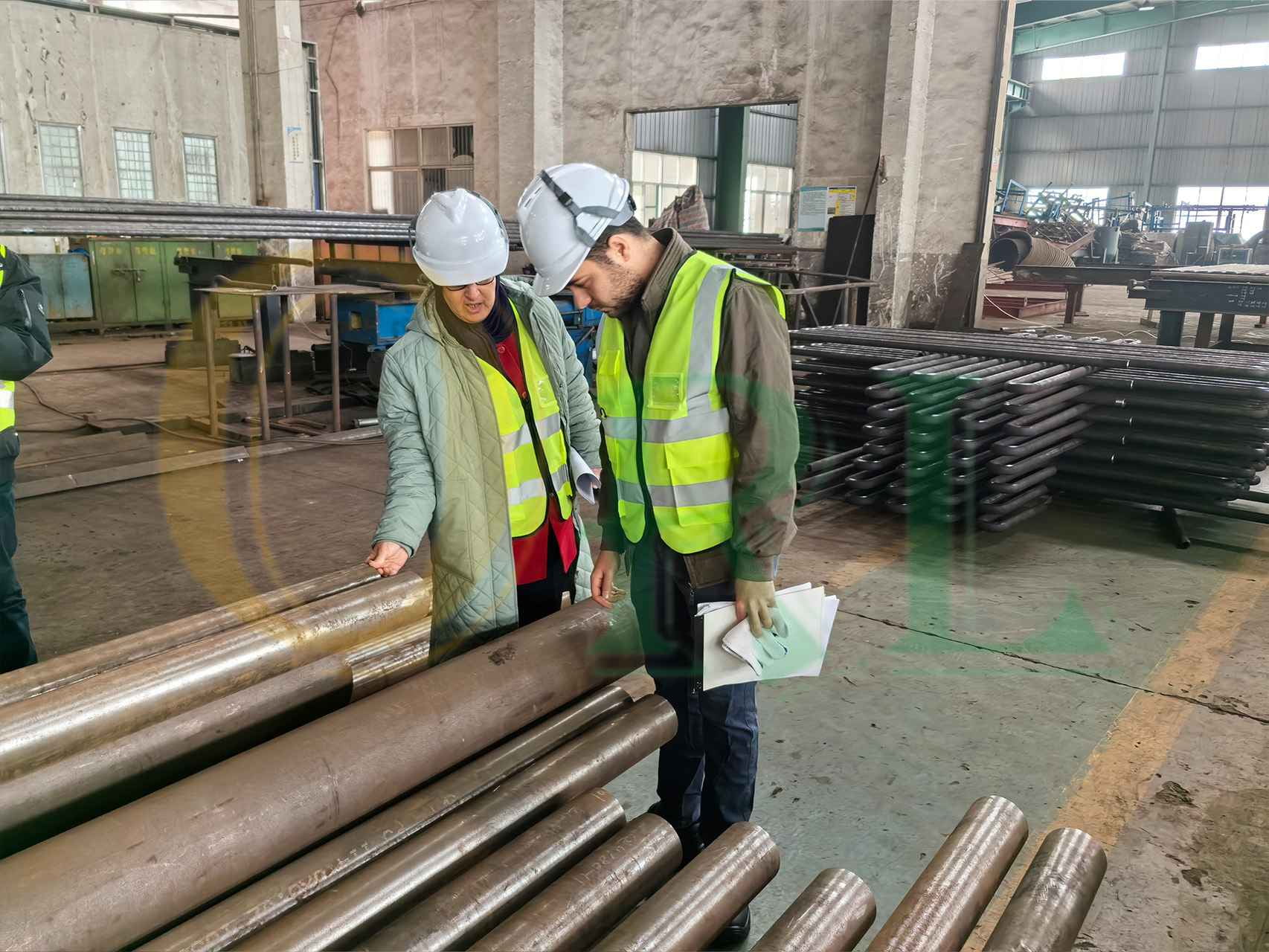
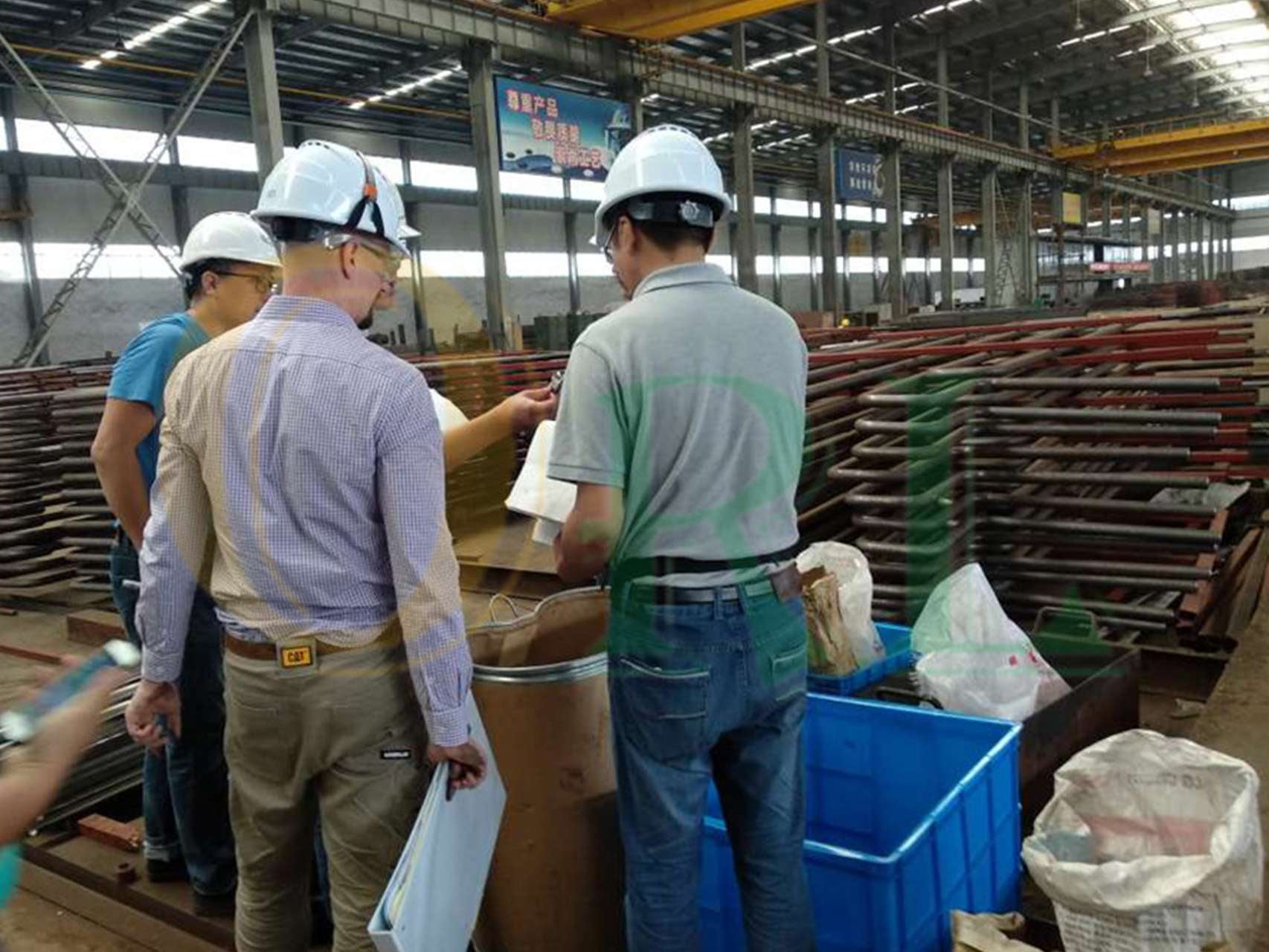
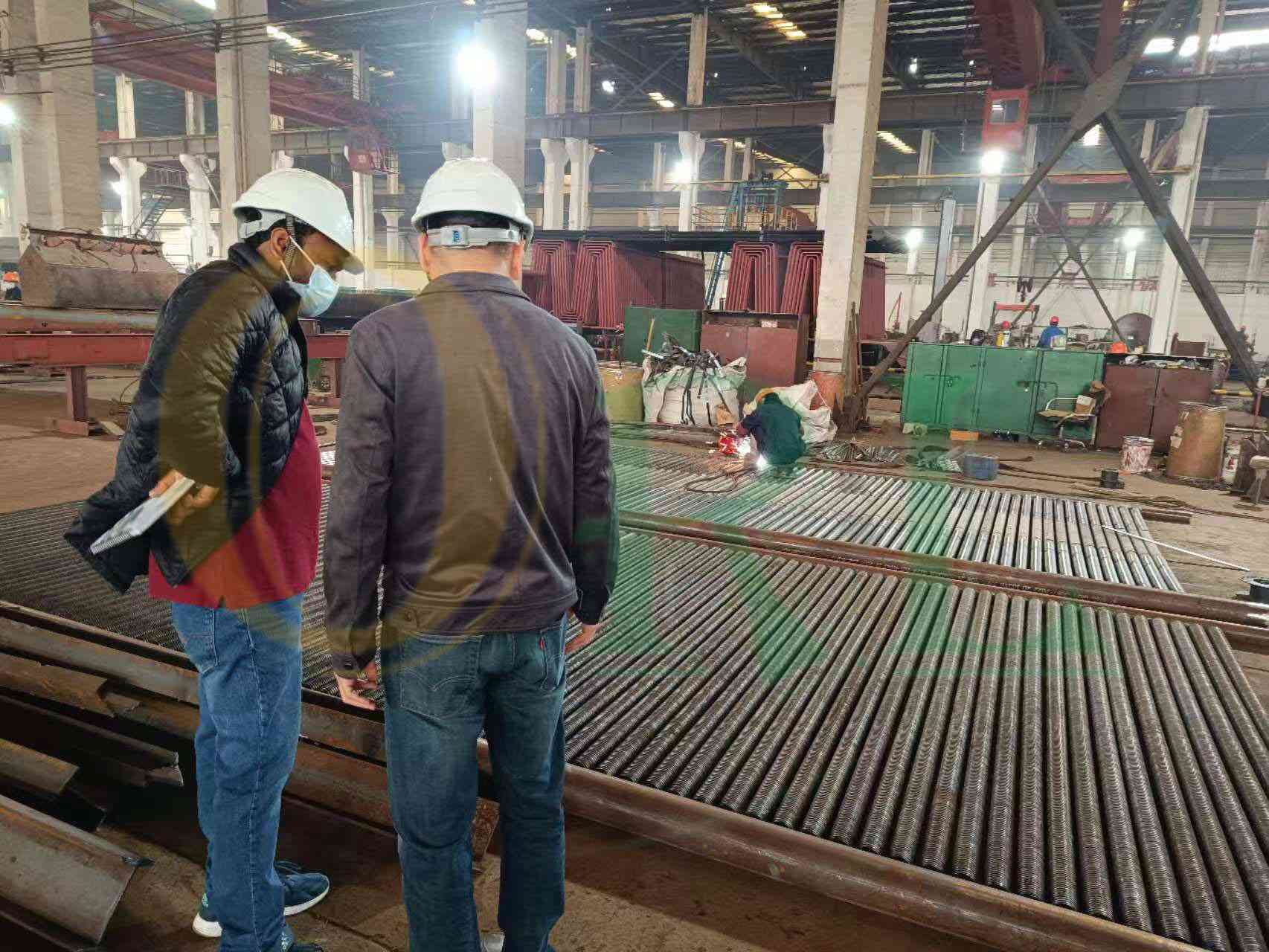
Customers review tube bundle fabrication, header weld records, and NDT reports during factory visits.
Frequently Asked Questions
Convection Bundle FAQ
Common questions from boiler owners, maintenance engineers, and EPC contractors about convection bundle specification, replacement, and supply.
What information do you need to quote convection tube bundles?
A drawing is the fastest route to quotation. Without one, we work from the following parameters:
- • Boiler type and fuel (or process type for WHB)
- • Flue gas inlet temperature and flow rate (or boiler capacity in t/h)
- • Flue gas dust loading — determines bare vs finned
- • Working fluid: water / steam / other; design pressure and temperature
- • Tube OD, wall thickness, and pitch (if known)
- • Bundle envelope: overall width, height, and depth
- • Number of tube rows and passes
- • Applicable design code (ASME Sec. I / VIII / GB / EN)
- • New build or replacement; if replacement — any upgrade requirements
- • Required delivery date or outage window
How do you decide between bare tube and finned tube?
The primary criteria is flue gas dust loading and corrosion tendency:
- • Bare tube — for coal, CFB, biomass, and other solid-fuel boilers where ash would block fin channels or cause erosion wear of the fins themselves. Also the correct choice for high-sulphur gas where dew point corrosion on fin surfaces is a risk.
- • Finned tube — for clean or low-dust gas: natural gas, LPG, cement kiln exhaust (after cyclone), gas turbine exhaust (HRSG). Fins increase heat transfer area by 3–6× over bare tube, allowing a more compact bundle at the same duty.
If your application sits between these cases — for example a biomass boiler with a good dust collection system upstream — share the operating data and we'll advise on fin pitch options that stay within self-cleaning limits.
How do you handle replacement bundles when the original drawings are unavailable?
This is common for ageing boilers. Our approach:
- • From site measurements — header interface positions, nozzle sizes, and bundle envelope dimensions taken by your maintenance team, supplied to us with a sketch or photo. We produce a fabrication drawing for your approval before any material is cut.
- • From failed bundle samples — if the failed bundle can be shipped or representative sections sent, we reverse-engineer tube OD, wall thickness, pitch, and header drill pattern directly. We also identify the original material grade and confirm whether an upgrade is recommended.
- • Upgrade during replacement — replacement scope is the right moment to increase tube wall thickness, upgrade from SA-210 A1 to T11 on the hotter rows, or change from bare to finned if operating conditions have changed.
What documentation comes with the bundles?
Standard documentation package included with every delivery:
- • Tube and header EN 10204 3.1 Mill Test Certificates (chemistry + mechanical)
- • Fin material certificate (for finned tube bundles)
- • Welding Procedure Specifications (WPS) and Procedure Qualification Records (PQR)
- • Welder qualification records (WPQ)
- • NDE reports — RT/UT on header welds, PT/MT on tube stubs as required by code
- • Hydrostatic test certificate
- • Dimensional inspection report
- • As-built drawing
- • ASME Data Report (for ASME-stamped scope)
Third-party witness inspection (SGS, BV, TÜV) available on request.
What is the typical lead time?
Lead time is measured from drawing approval. Typical ranges:
- • Small bare tube replacement bundle (carbon steel, single pass): 6–10 weeks
- • Medium bare tube bundle (multi-pass, with headers): 10–14 weeks
- • Finned tube bundle (fin fabrication adds to schedule): 10–16 weeks
- • T22 or alloy scope (PWHT required, additional NDE): add 2–4 weeks
Share your outage window at enquiry stage — we schedule production backward from your delivery date and flag any risk early.
Can convection bundles be supplied as part of a wider pressure parts package?
Yes — ORL Power manufactures all major boiler pressure parts. Common packages including convection bundles:
- • Convection Bundle + Economizer (most common — both sit in the convection pass)
- • Convection Bundle + Superheater / Reheater + Economizer (full convection pass package)
- • Full pressure-parts package including Steam Drum, Water Walls, and Headers
Package supply means a single technical interface, one inspection visit, consolidated documentation, and coordinated shipping — less coordination overhead for EPC contractors and plant owners.
Have a technical question not covered here?
Ask Our Engineering TeamGet Your Quote
Contact Our Engineering Team
Describe your boiler type, flue gas conditions, and bundle scope — we reply within 24 hours with bare vs finned recommendation and pricing.
Get Your Convection Bundle Quote
Describe your scope — we reply within 24 hours with technical advice and pricing.
What to Include in Your Inquiry
- • Boiler type and fuel / process type
- • Flue gas inlet temperature & dust loading
- • Working fluid: water or steam; design pressure
- • Tube OD, wall thickness, pitch (if known)
- • Bundle envelope (W × H × depth) or tube rows
- • Bare or finned tube preference
- • Design code (ASME / GB / EN)
- • New build or replacement; delivery window