
Tubular Air Preheaters
Shell-and-tube air preheaters for power boilers, industrial boilers, and waste heat recovery systems. Material grade — carbon steel, ND steel, or enamel-coated — is selected against flue gas dew point and fuel sulfur content to match service life to outage interval.
Fundamentals
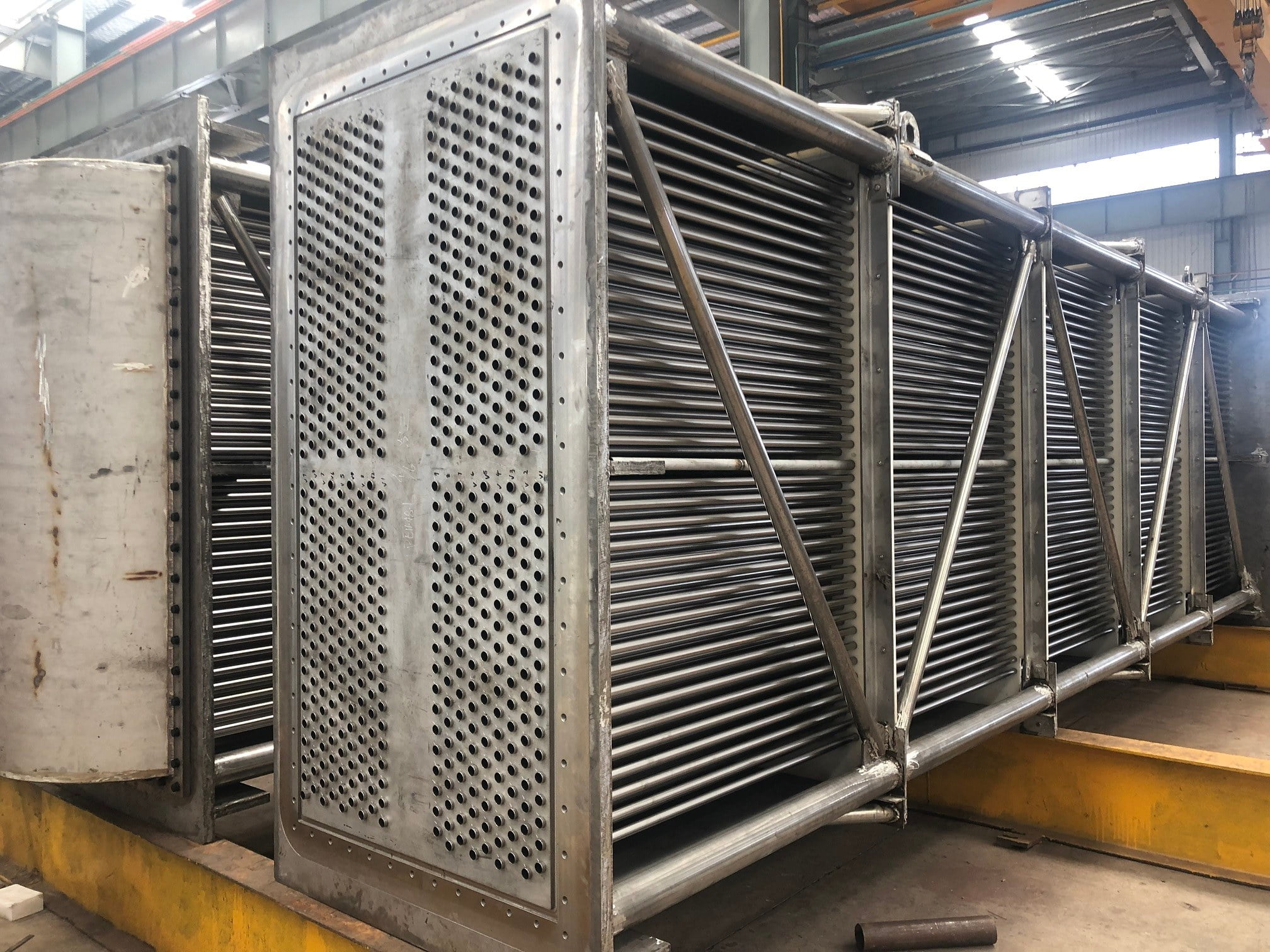
How a Tubular Air Preheater Works
A tubular air preheater (APH) recovers heat from boiler flue gas to preheat combustion air before it enters the furnace. Raising combustion air temperature by 100°C improves boiler thermal efficiency by approximately 2–2.5% and reduces fuel consumption. The trade-off is that the APH cold end operates below the flue gas acid dew point — which is why material selection is the critical design decision.
Construction and Operating Principle
Where APHs Are Used
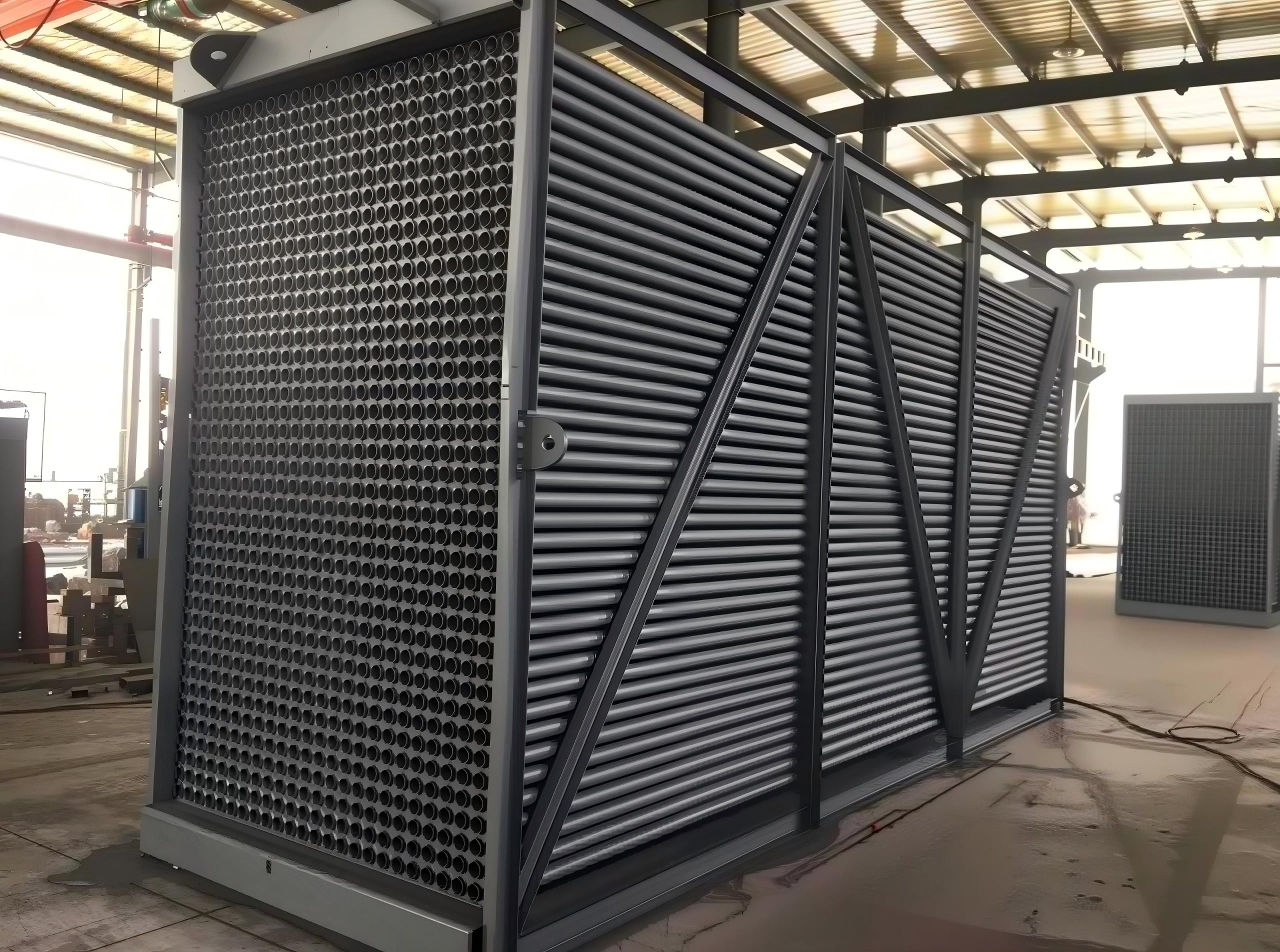
- Coal-fired power station boilers
- Bagasse & biomass cogeneration boilers
- Industrial package boilers (oil & gas fired)
- CFB boilers — convection pass tail end
- Waste-to-energy boiler tail gas cooling
- Cold-end replacement during scheduled outage
Product Range
APH Types by Corrosion Risk
The right tube material depends on fuel sulfur content and cold-end flue gas exit temperature. These two factors determine whether the cold end will operate above or below the acid dew point — and by how much. Three material configurations cover the full range of industrial boiler applications.
Carbon Steel APH
The standard configuration for natural gas-fired boilers, low-sulfur coal, and applications where cold-end exit temperature is maintained well above the acid dew point. Suitable when fuel sulfur content is below 0.5% and cold-end temperature is held above 130°C. Lowest cost and shortest lead time of the three configurations.
Tube material
20G / SA-178A
Fuel suitability
Gas / low-S coal
Cold-end temp
Above 130°C
Tube sheet
Q345R / SA-516
- Lowest cost and shortest lead time
- New build with confirmed low-sulfur fuel
- Wall thickness sized for erosion life target
ND Steel Cold-End APH
The most common configuration for coal-fired and heavy-oil-fired boilers. ND steel (09CrCuSb) tolerates acid condensation rather than preventing it — its Cr, Cu, and Sb additions dramatically reduce corrosion rate in dilute H₂SO₄ versus carbon steel. The cold end can operate at or below the dew point without rapid tube loss.
Tube material
09CrCuSb (ND)
Fuel suitability
Coal / heavy oil
Corrosion resistance
~5–8× vs C-steel
Common use
Cold-end / full APH
- Cold-end only, or complete APH in ND steel
- Matched to original geometry for drop-in fit
- Most common coal-fired plant replacement
Enamel-Coated APH
For the most severe corrosion environments — high-sulfur coal, waste-to-energy flue gas containing HCl and SO₃, or where cold-end temperature must be set very low to maximise heat recovery. A fused glass enamel coating on inner and outer tube surfaces is chemically inert to both sulfuric and hydrochloric acid. The smooth surface also resists ash fouling.
Tube material
CS + glass enamel
Acid resistance
H₂SO₄ + HCl
Fuel suitability
High-S coal / WtE
Surface
Smooth / low fouling
- Maximum dew point corrosion resistance
- Suitable where HCl is present (WtE / refuse)
- Smooth surface reduces soot deposits
Quick Material Selection Guide
| Fuel / Application | Sulfur Content | Cold-End Risk | Recommended Tube |
|---|---|---|---|
| Natural gas | Negligible | None | Carbon steel (20G) |
| Low-sulfur coal (< 0.5%S) | Low | Low — manage exhaust temp | Carbon steel (20G) |
| Bituminous coal (0.5–2%S) | Medium | Moderate dew point risk | ND steel (09CrCuSb) |
| High-sulfur coal / heavy oil (> 2%S) | High | Significant corrosion | ND steel (09CrCuSb) |
| Waste-to-energy / municipal refuse | Variable + HCl | Severe — H₂SO₄ + HCl | Enamel-coated |
| Bagasse / biomass (mixed fuel) | Low–medium | Low–moderate | Carbon steel or ND steel |
Not sure which applies to your fuel? Tell us fuel type, sulfur content (if known), and cold-end design temperature — we'll confirm the tube material.
Get Material AdviceQuality Assurance
Materials & Standards
Air preheater tube material is selected against dew point corrosion risk, not temperature or pressure alone. The applicable code governs the tube sheet and pressure boundary design — the tube material governs service life between replacements.
Tube Material by Corrosion Environment
Tube Sheet, Shell, and Pressure Boundary
Cold-end replacement supply: If only the cold-end tube section has failed, ORL Power can supply replacement cold-end tubes and tube sheets matched to the original APH geometry — without replacing the shell, casing, or hot-end section. This requires the existing APH drawing or field measurements to confirm tube OD, pitch, and tube sheet thickness.
Certifications & Compliance

Grade A Boiler
ISO 9001
ISO 14001
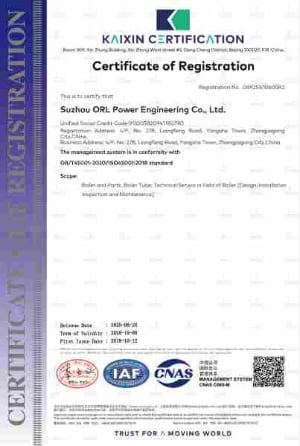
ISO 45001
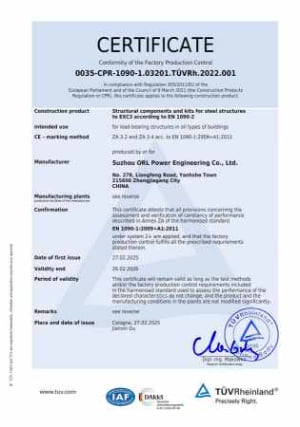
EN 1090
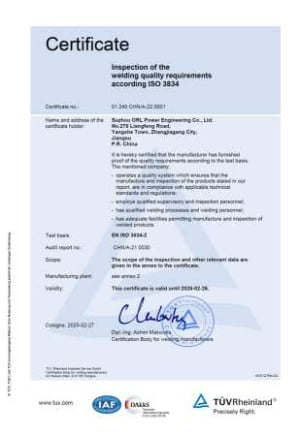
EN 3834
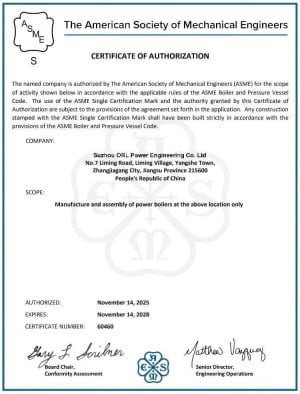
ASME S
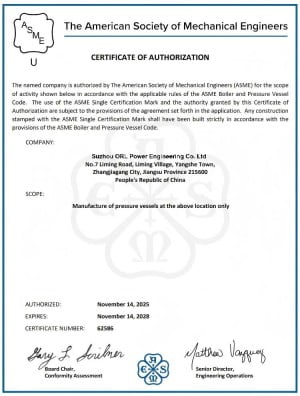
ASME U
Our Advantage
Why Choose ORL Power
An air preheater that fails between outages forces an unplanned shutdown. The points below reflect what ORL Power does differently to make early failure uncommon — starting with material selection, not ending with it.
Dew Point Check Before Material Confirmation
Before we confirm a tube material, we ask for fuel sulfur content and cold-end design temperature. If a customer specifies carbon steel for a coal-fired boiler running at 120°C cold-end exit — below the dew point — we flag it in writing before taking the order. We are not interested in supplying an APH that will corrode out in 18 months.
ND Steel MTC Verification — Every Heat
ND steel (09CrCuSb) is only effective if the Cr, Cu, and Sb additions are within specification. We verify the 3.1 MTC chemistry against the GB standard for every tube heat before it enters production. Tubes from heats outside the Sb range (0.04–0.10%) are rejected — the corrosion resistance depends on getting that number right.
Tube-to-Tube-Sheet Joint Quality
The tube-to-tube-sheet joint is the most common leak location on an in-service APH. We qualify the expansion procedure (or seal weld procedure) against the applicable code before production. Each joint is tested in the hydrostatic test, and a dye penetrant check is run on all seal welds. Tube pitch and projection length are verified by dimensional inspection report against the drawing.
Cold-End Replacement Geometry Match
Replacement cold-end sections must fit the existing APH shell without modification. We manufacture to the original drawing dimensions — tube OD, wall, pitch, tube sheet thickness, flange drilling, and nozzle locations. If no drawing exists, we work from field measurements and photographs. The replacement section is pre-assembled and dimensionally verified before crating.
Complete APH from One Source
ORL Power supplies the complete APH assembly — tube bundle, tube sheets, shell, air-side casing, baffles, access doors, expansion joints, and all nozzle connections — under a single code data report. For boiler OEMs and EPC contractors, this eliminates the coordination risk between a tube fabricator and a casing fabricator that is common when splitting the supply.
Outage Window Delivery
APH replacement is always tied to a planned outage window. We confirm the delivery date at order placement with a production milestone schedule — material receipt, tube expansion, testing, and despatch dates are all fixed, not estimated. For short-window outage replacements, we advise the customer to initiate procurement at least 10–14 weeks before the outage start date for ND steel orders.
Tell us your fuel type, sulfur content, and cold-end temperature.
We'll confirm tube material, geometry, and delivery schedule in one reply.
Applications
Industries We Serve
Every combustion boiler generates flue gas that can preheat incoming air. The buyer is typically a boiler OEM building a new unit, an EPC contractor specifying the complete boiler island, or a plant owner replacing a corroded cold-end section during a scheduled outage.
Power Plants
Coal-fired and biomass power station boilers. Tubular APHs at the tail end of the flue gas duct, after the economizer. Cold-end replacement supply in ND steel or enamel-coated tubes for boilers burning medium- to high-sulfur coal where the original carbon steel cold end has corroded through.
Sugar Mills & Cogeneration
Bagasse-fired cogeneration boilers for the sugar industry. Bagasse has low sulfur content but high moisture, and the flue gas carry-over of fibre and ash makes erosion at the APH hot end the primary concern. Carbon steel tubes at adequate wall thickness for the expected erosion rate are the standard specification.
Industrial Package Boilers
Oil- and gas-fired package boilers for process steam supply in chemical, pharmaceutical, food, and general industry. Low sulfur fuel — carbon steel APH with managed exhaust temperature. Boiler OEMs supplying the complete packaged unit specify the APH as part of the pressure parts package.
Waste-to-Energy & High-Sulfur Applications
Municipal solid waste and refuse-derived fuel boilers with chlorine and SO₃ in the flue gas. Enamel-coated tube APHs for the highest corrosion resistance. Also covers high-sulfur coal boilers in markets where fuel quality is variable — cement plants, lime kilns, and industrial coal consumers burning whatever is available.
Tell us your fuel and boiler type.
We'll confirm tube material, design approach, and lead time in one reply.
Manufacturing Process
Factory & Process
Tubular APH quality depends on three things that cannot be inspected after the fact: the tube material chemistry, the tube-to-tube-sheet joint integrity, and the dimensional accuracy of the completed bundle. Each production step is documented so that by the time the APH leaves the shop, the quality record is already complete.
Key Production Steps
Customer Visits & Factory Evidence
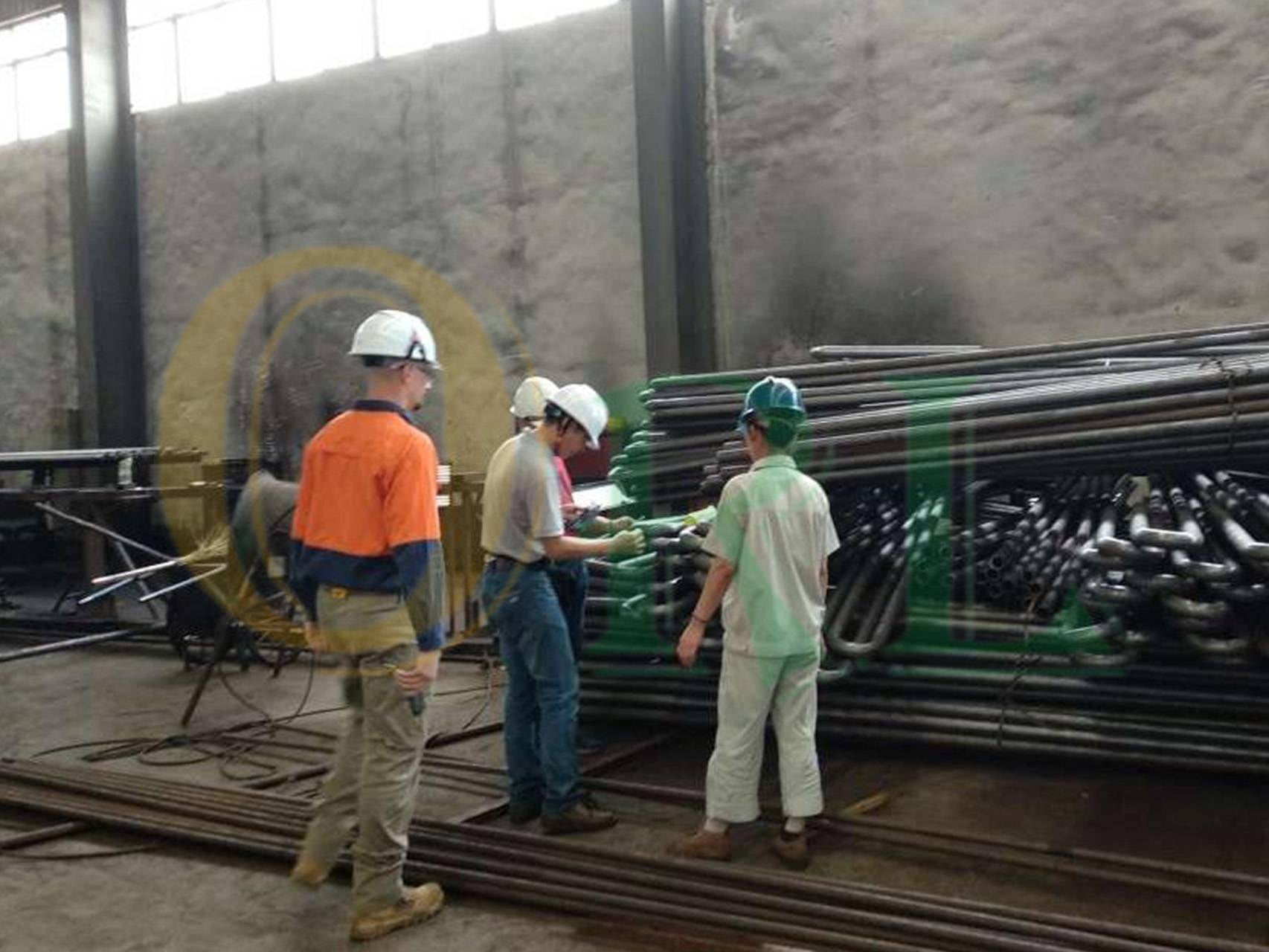
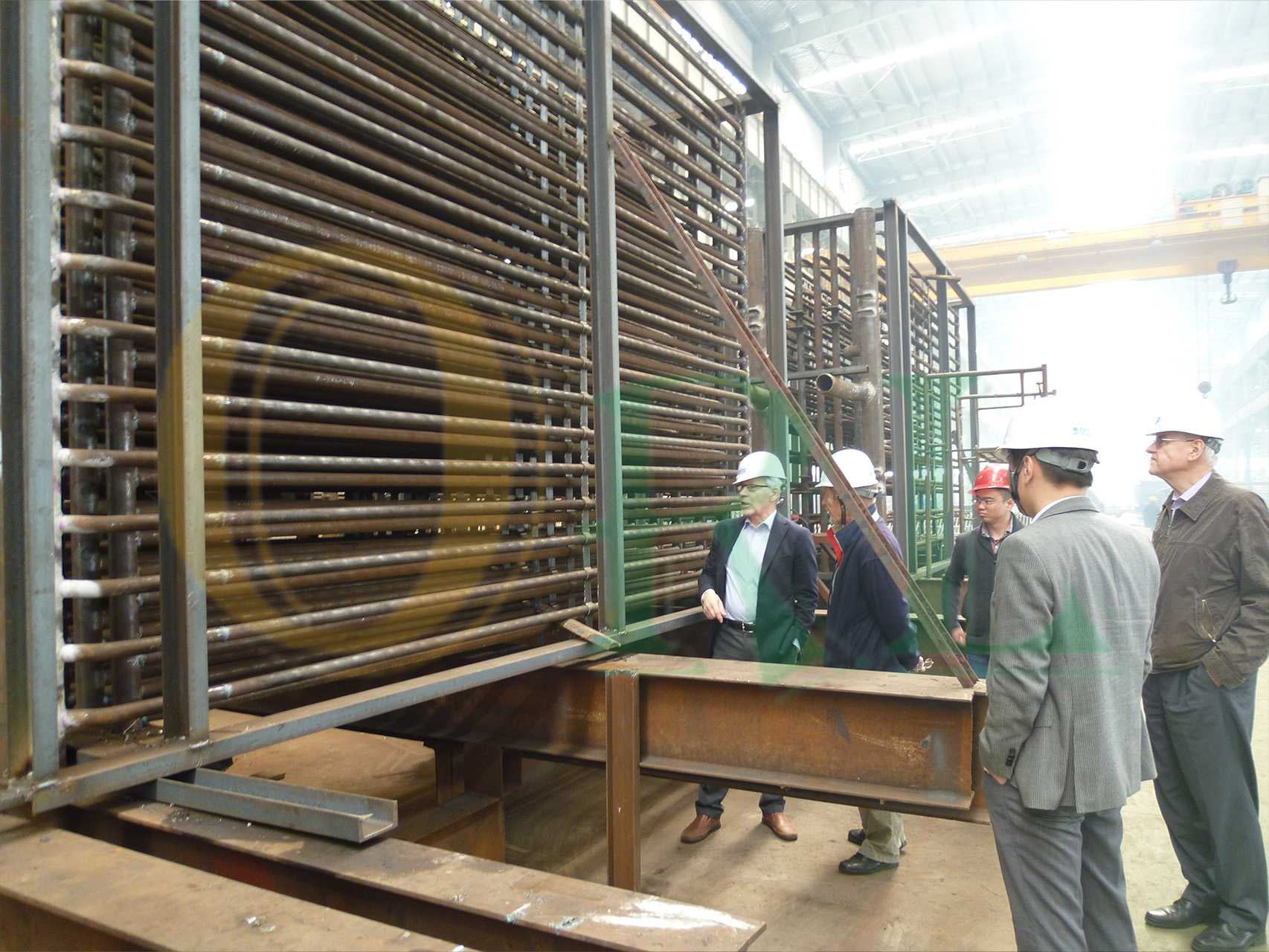
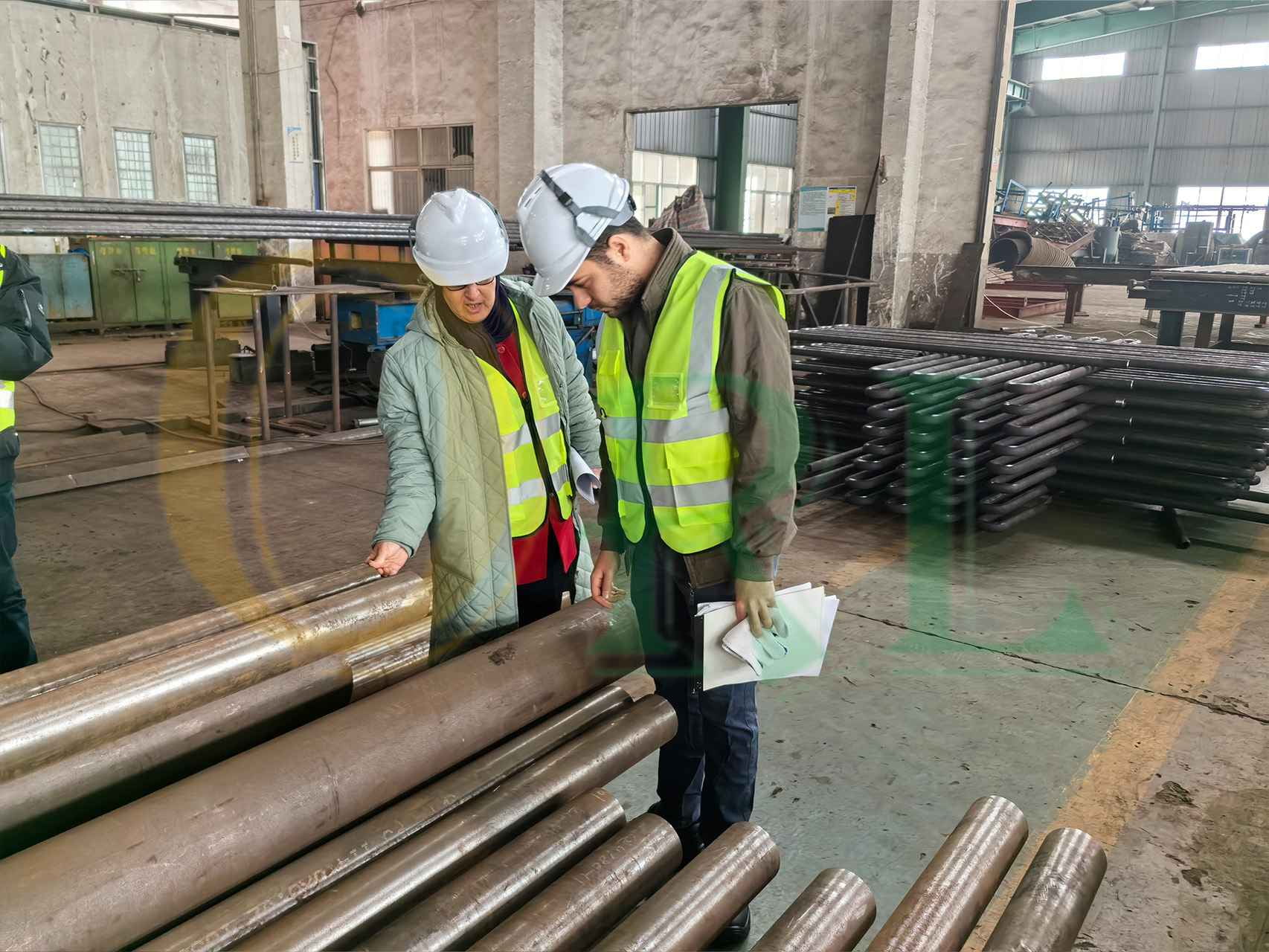
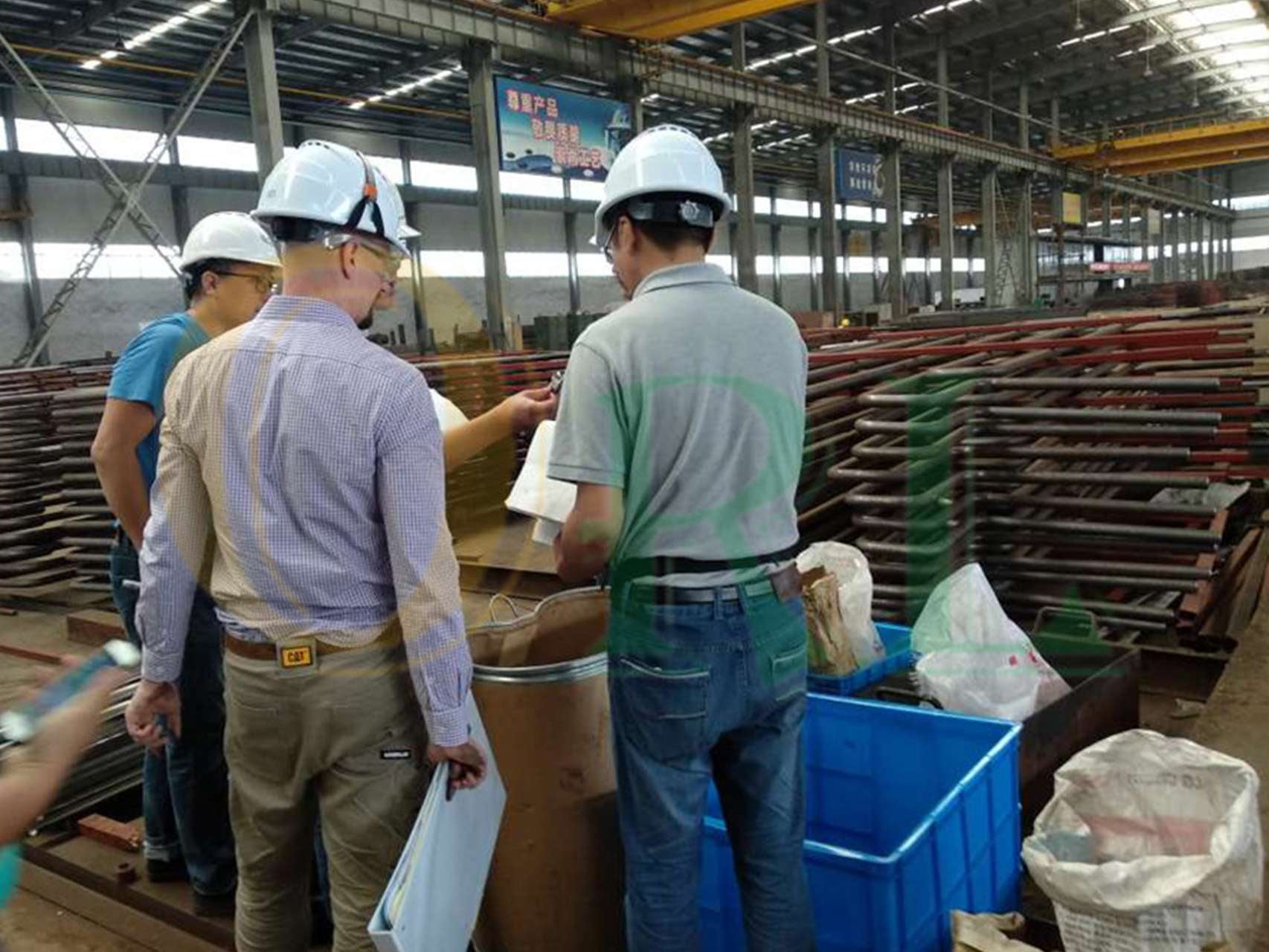
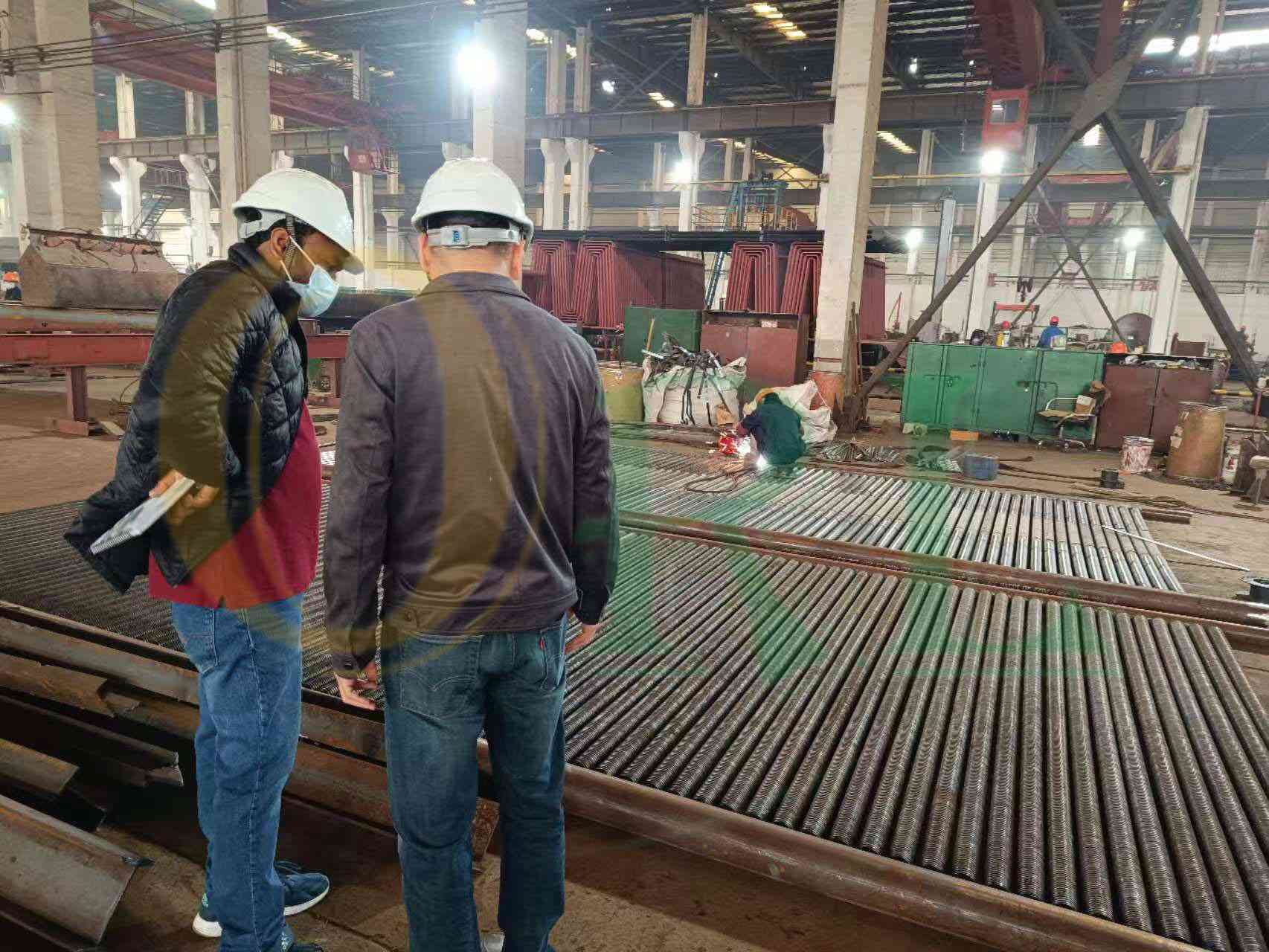
Customers review tube material certifications, inspect tube-to-tube-sheet joints, and witness the hydrostatic test during factory visits.
Frequently Asked Questions
Air Preheater FAQ
Common questions from plant engineers, EPC contractors, and boiler OEMs about tubular APH design, material selection, and cold-end replacement.
How do I choose between carbon steel, ND steel, and enamel-coated tubes?
The decision is determined by two numbers: fuel sulfur content and cold-end flue gas exit temperature. These two inputs determine whether the tube wall will operate above or below the acid dew point during normal operation.
The acid dew point for a boiler burning 1%S coal is typically around 130–140°C. If your cold-end exit temperature is 150°C — 10–20°C above the dew point — carbon steel is adequate with managed combustion and boiler start-up procedures. If your cold-end temperature is 120°C, acid condensation is continuous during operation, and carbon steel will corrode rapidly.
ND steel (09CrCuSb) is the right choice when your coal sulfur content is 0.5–3% and the cold-end temperature will operate at or near the dew point for significant periods. It does not prevent condensation — it survives it far longer than carbon steel. Typical life improvement is 4–8 times over carbon steel in the same service.
Enamel-coated tubes are specified when ND steel is insufficient — specifically when the flue gas contains HCl (waste-to-energy, high-chlorine coal), when sulfur content is consistently above 3%, or when the cold-end temperature must be set very low to maximise heat recovery from the flue gas. If you send us your fuel analysis and cold-end temperature, we will advise the tube material in writing.
Can you supply only the cold-end replacement without replacing the entire APH?
Yes — cold-end replacement supply is one of ORL Power's most frequent APH orders. When only the low-temperature tube section has corroded through, replacing the entire APH (including the still-serviceable hot-end section and shell) is unnecessary and costly. We supply a replacement cold-end tube bundle that installs directly into the existing APH shell using the existing flanges.
To supply a matched replacement cold end, we need from you: the existing APH drawing (or field-measured tube OD, tube pitch, tube length, tube sheet thickness, and flange drilling), the number of tubes in the cold-end section, the current tube material (to confirm what failed and what upgrade is appropriate), and the required delivery date relative to your outage window.
If the original drawing is not available, we work from field measurements and photographs. We generate a detailed drawing for your approval before fabrication begins. The replacement section is dimensionally verified against the drawing before despatch.
What is the difference between a tubular APH and a rotary regenerative APH?
A tubular APH (the type ORL Power manufactures) is a recuperative heat exchanger — the two gas streams are permanently separated by the tube wall. Flue gas flows inside the tubes; air flows outside. There is no moving parts and no leakage path between the gas streams. The heat transfer surface is fixed in place. Maintenance involves replacing tubes or tube sections that have corroded or eroded.
A rotary regenerative APH (Ljungström type) uses a rotating matrix of corrugated metal plates that alternately passes through the hot flue gas stream and the cool air stream, transferring heat through the matrix mass. Rotary APHs are more compact and can transfer more heat per unit weight — which is why they are dominant in large coal-fired power stations above 200 MW. However, they have inherent air-to-gas leakage (through the rotating seals), require continuous maintenance of the drive mechanism and seals, and the corrugated plate elements corrode at the cold end in the same way as tubes.
For industrial boilers (typically below 100 MW equivalent thermal output), package boilers, sugar mill boilers, and waste heat boilers, the tubular design is standard — simpler, more reliable, and easier to maintain or partially replace.
What information do you need for a quotation?
The fastest route is to send your APH drawing. If no drawing exists, we need the following minimum information:
- • Fuel type and sulfur content (determines tube material)
- • Flue gas inlet and outlet temperature (°C)
- • Air inlet and outlet temperature (°C)
- • Flue gas flow rate (kg/h or Nm³/h)
- • Air flow rate (kg/h or Nm³/h)
- • Flue gas side design pressure (kPa)
- • Air side design pressure (kPa)
- • Tube OD and wall (or allow us to calculate)
- • Applicable code (ASME Section I / GB/T 16507 / EN 12952 / IBR / other)
- • Supply scope: complete APH, or cold-end replacement only
- • Quantity and required delivery date
For cold-end replacement: additionally tube pitch, tube sheet thickness, shell ID, and flange drilling, so that the replacement section matches the existing APH geometry.
What are typical lead times?
Lead times from drawing approval (or from our issued drawing if we generate from design conditions):
- • Carbon steel cold-end replacement (ND steel tubes, standard sizes): 8–12 weeks
- • Complete carbon steel APH, new build: 10–14 weeks
- • Complete ND steel APH, new build: 12–16 weeks
- • Enamel-coated tube APH: 14–18 weeks (enamel coating adds process time)
Lead times are confirmed at order placement with a fabrication milestone schedule. For outage replacement orders, initiate procurement at least 10–14 weeks before your outage start date to allow adequate time for drawing approval, fabrication, and sea freight.
Do you supply the complete APH or just the tube bundle?
ORL Power can supply either. The standard supply scope for a new APH is the complete assembly: tube bundle (tubes, tube sheets, baffles), flue gas shell (upper and lower headers or box headers), air-side casing, all nozzle connections, access doors, and flue gas duct expansion joints. The complete assembly arrives on site ready to bolt into the duct system.
For cold-end replacement, the supply scope is typically: replacement cold-end tube bundle with tube sheets and connecting flanges, sized to fit directly into the existing APH shell without modification to the hot-end section or shell. In this case the air-side casing and shell are retained from the existing unit. We confirm the supply scope in writing at quotation stage — there should be no ambiguity about what is and is not included.
Have a technical question not covered here?
Ask Our Engineering TeamGet Your Quote
Contact Our Engineering Team
Send your APH drawing, or tell us your fuel type, gas temperatures, flow rates, and applicable code. We reply within 24 hours with tube material recommendation, pricing, and lead time.
Get Your APH Quote
Share your fuel type and design conditions — we reply within 24 hours with material recommendation, pricing, and lead time.
What to Include in Your Inquiry
- • Fuel type and sulfur content (%)
- • Flue gas inlet / outlet temperature (°C)
- • Air inlet / outlet temperature (°C)
- • Flue gas and air flow rates (kg/h)
- • Design pressure — gas side and air side
- • Supply scope: complete APH or cold-end replacement
- • Applicable code (ASME / GB / EN / IBR)
- • Quantity and required delivery date
- • Drawing (if available) — attach or email