
CFB Boiler Manufacturer
Project-specific Circulating Fluidized Bed (CFB) boiler solutions for power generation, cogeneration, sugar mills and industrial steam applications. Fuel suitability, steam parameters, emissions requirements and supply scope are reviewed against the project data.
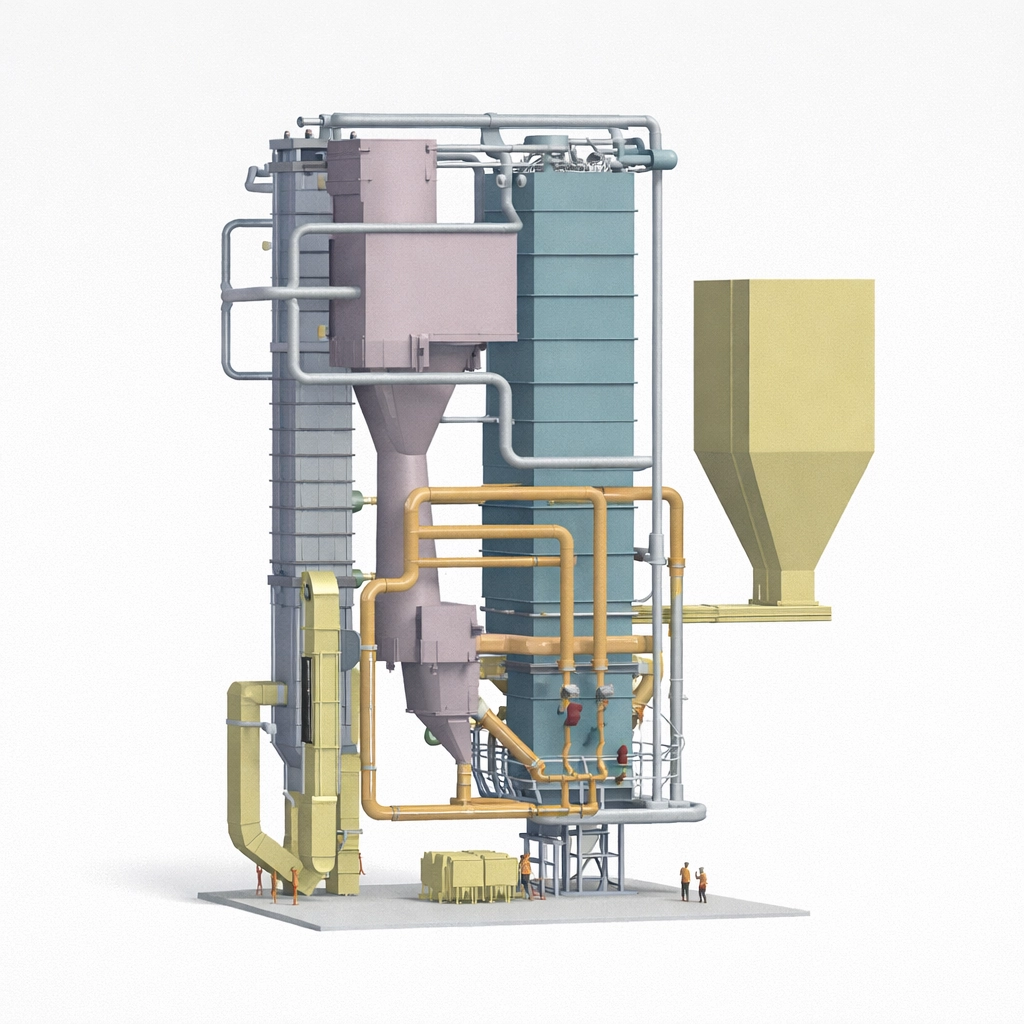
Product Range
CFB Boiler Configurations & Applications
Configuration and supply scope are reviewed for each project. Final steam parameters, fuel system, combustion arrangement and emissions-control interface depend on the approved project data and applicable code.
Industrial CFB
- • Fuel suitability reviewed from analysis
- • Industrial steam and captive power applications
- • Combustion arrangement selected by project
Cogeneration CFB
- • Sugar mill and biomass project review
- • Process steam and power-generation integration
- • Fuel blending reviewed against design basis
Power Generation CFB
- • Coal, biomass and selected alternative fuels
- • Steam conditions confirmed by project design basis
- • Emissions interface reviewed with plant requirements
Custom CFB Boiler Design Available
Send us your fuel analysis and steam requirements for a tailored solution.
Manufacturing Capabilities
Boiler & Pressure-Part Manufacturing
Fabrication facilities in Jiangsu, China support boiler pressure parts, vessels and related assemblies, with welding, inspection and documentation requirements defined by the applicable code and project scope.
Years Experience
Boiler and pressure-equipment projects
Inspection Planning
NDE scope defined by code and project requirements
Project Documentation
Documentation scope agreed by project
Material Certificates
EN 10204 3.1 documentation when specified
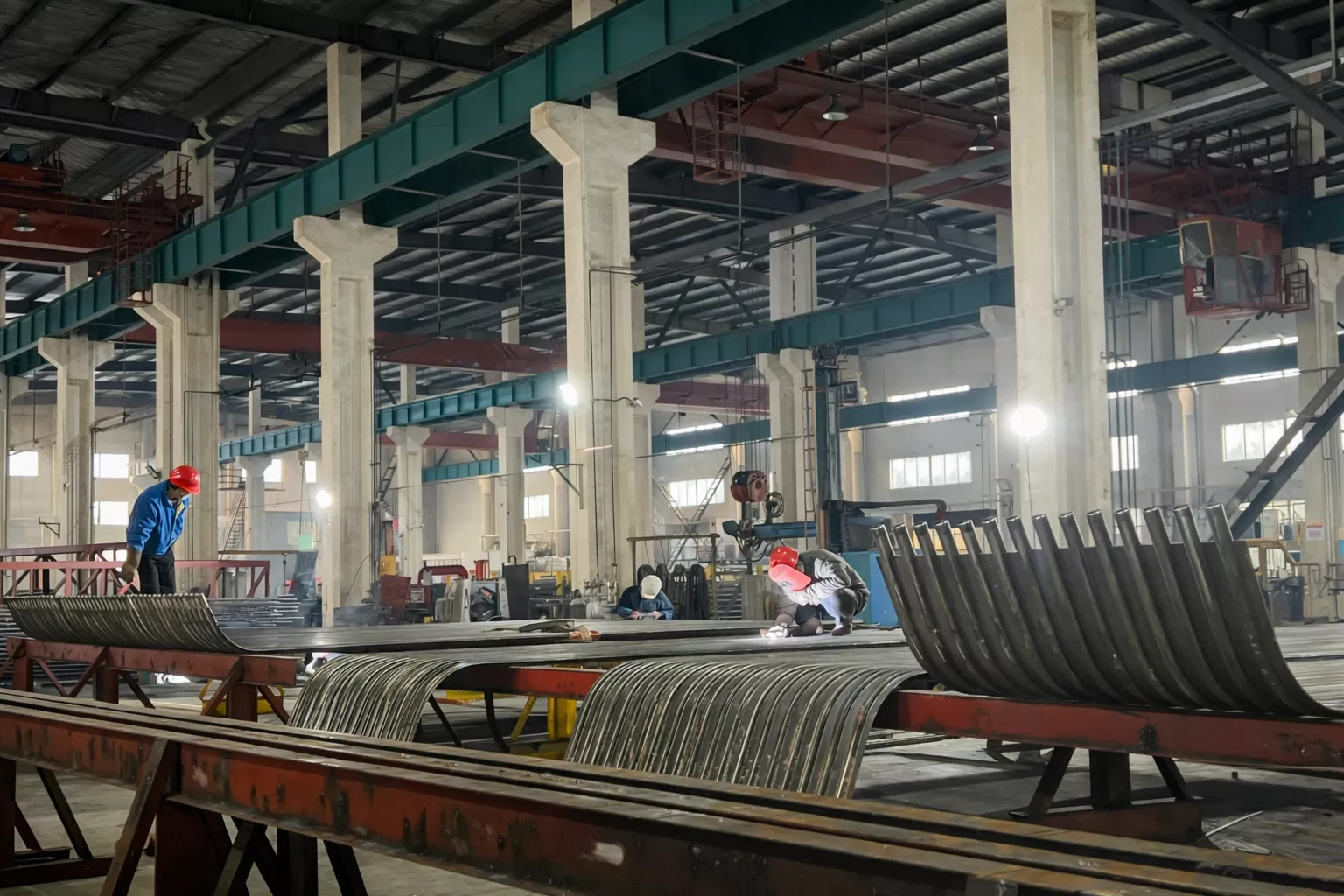
Advanced Manufacturing
Pressure vessel fabrication facility
Quality & Compliance
Factory & Process
See Our Manufacturing Process
See selected fabrication and inspection processes used for boiler pressure parts and related assemblies.
Boiler Pressure-Part Manufacturing Process
Watch selected fabrication processes for boiler pressure parts and related assemblies
Manufacturing Process Highlights
Material Preparation & Cutting
Material preparation and cutting performed according to drawings and project requirements
Welding & Assembly
Qualified welding procedures and personnel used as required by the applicable project documents
NDT & Quality Testing
RT, UT, PT and MT applied where required by code, drawings and the agreed ITP
Final Inspection & Packaging
Final inspection, documentation review and third-party inspection support when included in scope
Competitive Advantages
Why Choose ORL CFB Boiler Solutions
Manufacturing, engineering coordination, inspection and documentation support for project-specific CFB boiler and pressure-part supply scopes.
Engineering Review
Furnace arrangement, circulation, heat-transfer surfaces and auxiliary interfaces are reviewed according to fuel data, steam requirements, site conditions and the agreed project scope.
- • Fuel and ash characteristics reviewed
- • Steam conditions confirmed by project
- • Thermal and mechanical interfaces coordinated as applicable
Fuel Flexibility Review
CFB technology can be considered for a range of solid fuels, but suitability depends on the actual fuel analysis, particle size, ash behavior, moisture, sulfur and the required operating range.
- • Coal and lignite applications
- • Biomass and bagasse applications
- • Selected alternative fuels subject to engineering review
Emissions Strategy
Combustion staging, limestone injection and other emissions-control measures can be reviewed against the fuel analysis and the applicable project emission limits.
- • In-furnace limestone injection when applicable
- • Staged combustion and air distribution review
- • Downstream treatment interface reviewed when required
Project Coordination
Technical clarification, drawing review, inspection coordination and site-service requirements can be managed according to the agreed responsibility matrix and contract scope.
- • Proposal-stage technical clarification
- • Manufacturing document coordination
- • Site support when included in the contract
Inspection & Documentation
Material traceability, welding, NDE, dimensional inspection and documentation are managed according to the applicable code, approved drawings, ITP and agreed contract scope.
- • Material certification as specified
- • NDE scope defined by code and ITP
- • Third-party inspection support when specified
Commercial Review
Quotations are prepared against the defined supply boundary, material requirements, inspection scope, documentation requirements, delivery terms and other project-specific commercial conditions.
- • Defined supply boundary
- • Project-specific delivery schedule
- • Commercial terms agreed contractually
Industry Solutions
CFB Boiler Applications Across Industries
CFB boiler configurations can be reviewed for power generation, cogeneration and industrial steam projects, subject to fuel characteristics, steam conditions, site constraints and the agreed supply scope.
Power Generation
CFB boiler configurations for power-generation projects using suitable solid fuels. Fuel suitability, load range and plant interfaces are confirmed from the project design basis.
- • Coal and lignite power-generation projects
- • Independent power producers (IPP)
- • Biomass or co-firing applications when suitable
- • Operating range reviewed by project
Sugar Mills & Cogeneration
CFB boiler configurations can be reviewed for sugar-mill and biomass cogeneration projects. Process-steam and power-generation requirements are confirmed from the project data.
- • Bagasse and biomass firing
- • Cogeneration for process steam and power
- • Power-generation integration where applicable
- • Fuel blending reviewed from the design fuel envelope
Industrial Steam & Process
CFB technology can be reviewed for industrial steam and captive-power applications where the available fuel, steam demand and operating profile are suitable.
- • Paper and pulp mills
- • Chemical and petrochemical plants
- • Steel and metallurgical industries
- • Textile and food processing
Typical Project Scenarios
Coal-Fired Power Project
Power GenerationExample CFB application for a power-generation project using coal or lignite. Steam conditions, fuel envelope and emissions requirements are confirmed during project engineering.
Sugar Mill Cogeneration
BiomassExample CFB application for bagasse or biomass-based cogeneration. Fuel preparation, blending, steam demand and power-generation interfaces are reviewed by project.
Industrial Multi-Fuel Project
Industrial SteamExample industrial CFB application where more than one approved solid fuel may be considered. Final suitability depends on fuel analysis, ash behavior, emissions limits and operating requirements.
Frequently Asked Questions
CFB Boiler Technical FAQ
Common engineering questions from EPC contractors, power plant operators and industrial end users evaluating CFB boiler technology for a project.
How is CFB boiler performance evaluated for a project?
CFB boiler performance is not a fixed value. It is reviewed against the approved design basis and operating requirements for each project.
- • Fuel data: Heating value, moisture, ash, sulfur and expected variation
- • Steam conditions: Required capacity, pressure, temperature and feedwater conditions
- • Operating profile: Expected load range, annual operating pattern and plant integration
- • Auxiliary systems: Fuel preparation, air system, ash handling and emissions-control requirements
Efficiency, auxiliary consumption and other performance values are confirmed only after the relevant project data and calculation basis are defined.
What fuel information is required for a CFB boiler review?
Fuel suitability should be reviewed from the actual analysis rather than from the fuel name alone. The following information is normally useful:
Fuel Analysis:
- • Proximate and ultimate analysis
- • Lower / higher heating value
- • Moisture, ash and sulfur content
- • Ash composition and ash-fusion data when available
Operating Information:
- • Fuel particle-size range and preparation method
- • Primary and alternate fuel availability
- • Expected blending or co-firing requirements
- • Required load range and annual operating pattern
ORL can first review the available fuel data and identify any additional information needed before a technical proposal is developed.
What should be considered for CFB boiler maintenance?
Maintenance planning depends on the fuel, operating profile, refractory system, erosion conditions, water chemistry and the final boiler configuration.
Typical Inspection Focus:
- • Furnace water-wall and high-wear areas
- • Cyclone, refractory and return-leg condition
- • Air-distribution components and nozzles
- • Superheater, economizer and other heat-transfer surfaces
Maintenance Planning:
- • Inspection intervals set by operating condition and maintenance history
- • Wear-part and spare-part requirements reviewed by project
- • Shutdown scope coordinated with plant operating requirements
Maintenance intervals, component life and maintenance cost should not be treated as fixed values; they depend on the actual plant and operating conditions.
How are SO₂ and NOₓ requirements addressed in a CFB project?
Emissions-control requirements are reviewed from the fuel analysis, combustion design and the legally or contractually applicable emission limits.
SO₂ Control Review:
- • In-furnace limestone injection can be considered where applicable
- • Limestone quality and required feed rate depend on fuel sulfur and target emissions
- • Additional downstream desulfurization is reviewed when required by the project
NOₓ Control Review:
- • Furnace temperature and staged-air distribution are considered in combustion design
- • SNCR or other downstream measures can be reviewed when required
- • Final emission targets are confirmed against project-specific requirements
No universal emission value is assumed. The required boiler and flue-gas-treatment interfaces are defined for the specific project.
How is the delivery schedule for a CFB boiler project determined?
Delivery and project schedules depend on the supply boundary, engineering scope, drawing approval process, material availability, inspection requirements, module size, shipping route and site conditions.
- • Engineering: Design inputs and document-approval cycle
- • Procurement: Material specification and availability
- • Manufacturing: Fabrication sequence, inspection hold points and third-party inspection
- • Delivery: Packing, module dimensions and transport arrangement
- • Site activities: Erection and commissioning responsibilities when included in scope
A project-specific schedule is confirmed after the technical scope, approval process and delivery boundary are defined.
What technical support can be included in the CFB boiler supply scope?
Technical and site-service support is defined by the contract and responsibility matrix. Depending on the agreed scope, support can include:
Project Support:
- • Technical clarification and document review
- • Manufacturing and inspection coordination
- • Packing and shipment documentation
Site Support:
- • Installation supervision when included
- • Commissioning support when included
- • Operator training or spare-parts review when agreed
Warranty, service period, response arrangements and site responsibilities are confirmed in the applicable commercial and technical contract documents.
Have a project-specific CFB boiler question?
Ask Our EngineersGet Your CFB Boiler Proposal
Share your project requirements, fuel information and required steam conditions. Our team will review the available data and confirm the appropriate technical and commercial follow-up for your CFB boiler project.
What Information We Need
- Steam Requirements: Capacity (t/h), pressure (MPa), temperature (°C)
- Fuel Information: Type, analysis (proximate/ultimate), availability
- Site Conditions: Location, elevation, ambient conditions
- Emission Limits: Local environmental regulations
- Project Timeline: Expected commissioning date
Direct Contact Options
Why Choose ORL CFB Boilers?
- ✓ 20+ years of boiler and pressure-equipment manufacturing experience
- ✓ ASME S & U capabilities; EN and GB requirements reviewed as applicable
- ✓ Project-specific engineering review based on fuel and operating conditions
- ✓ Inspection and documentation scope agreed by project
- ✓ Commercial terms and delivery schedule confirmed after scope review